Traffic stops by Denver police plunge nearly 50% after new policy prohibits low-level enforcement
Share
Explore Our Galleries









Breaking News!
Today's news and culture by Black and other reporters in the Black and mainstream media.
Ways to Support ABHM?
By Shelly Bradbury, The Denver Post
James Roy II still remembers driving in Cherry Creek some 15 years ago when he was pulled over for an illegal turn, for turning right into the second lane instead of the first.
A Black man in his 20s, he and his two Black friends went into police safety mode: just get through it. But their white friend in the back seat took a different approach, calling the officer out for racial profiling, going on and on and on.
“We were frustrated with our friend, like, ‘Man, shut up. Stop,’ ” Roy said. “But he was like, ‘You just pulled this car over because it has Black people in it.’ He just kept going. And we were feeling so uncomfortable. But it actually worked. They were like, ‘OK, just go on.’ ”
Roy, now executive director of Denver Metro Community Impact, a nonprofit focused on advancing equity, left that traffic stop without a citation — but the memory is still fresh years later.
So is the time he was pulled over for an expired plate. And the time he was stopped because his taillight was out.
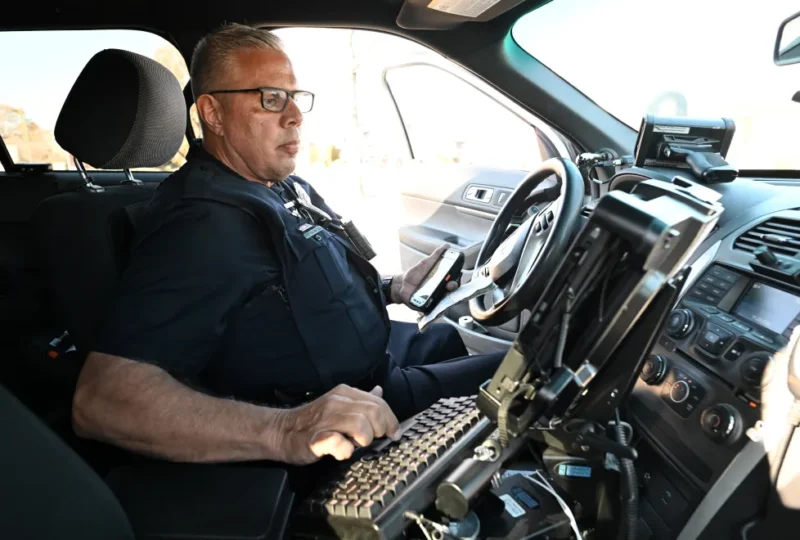
It’s that kind of traffic stop that Denver police Chief Ron Thomas aimed to curb in May when he changed his department’s traffic enforcement policy to prohibit officers from pulling drivers over solely for minor traffic infractions that don’t immediately threaten public safety.
The Denver Post has more about the policy change.
Comments Are Welcome
Note: We moderate submissions in order to create a space for meaningful dialogue, a space where museum visitors – adults and youth –– can exchange informed, thoughtful, and relevant comments that add value to our exhibits.
Racial slurs, personal attacks, obscenity, profanity, and SHOUTING do not meet the above standard. Such comments are posted in the exhibit Hateful Speech. Commercial promotions, impersonations, and incoherent comments likewise fail to meet our goals, so will not be posted. Submissions longer than 120 words will be shortened.
See our full Comments Policy here.