Today We Celebrate the Life of Dr. Horace M. Bond, Educator and Trailblazer
Share
Explore Our Galleries









Breaking News!
Today's news and culture by Black and other reporters in the Black and mainstream media.
Ways to Support ABHM?
From the African American Registry and Wikipedia
Horace M. Bond was born on this date in 1904. He was the grandson of slaves, the sixth of seven children.
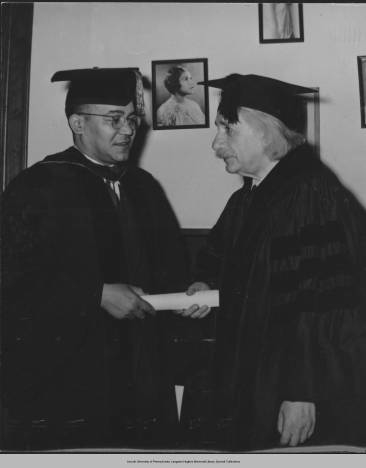
His mother was a schoolteacher, his father a minister, and both had attended Oberlin College. Bond excelled as a student, graduating from high school at the age of 14. He earned a master’s and doctorate from the University of Chicago, at a time when only a small percentage of any young adults attended any college.
Dr. Bond was the first African-American president of Lincoln University, the United States’ first degree-granting historically black university (HCBU). He was also in leadership at other HBCUs: Fisk, Dillard, and Atlanta universities.
From the 1930s through the 1960s, Dr. Bond was one of the major voices calling for equal educational opportunities and services for Blacks. Bond wrote several classic well-known academic articles and books on Blacks and education, including “The Education of the Negro in the American Social Order,” 1934, and “Negro Education in Alabama: A Study in Cotton and Steel,” in 1939.
Through his work with the Julius Rosenwald Fund, Bond was a powerful figure in directing and attracting philanthropic support to African-American schools. He was a past president of Fort Valley State College and his son Julian Bond became a prominent civil rights activist, the first African-American elected to the Georgia House of Representatives since the Reconstruction. Horace M. Bond died on Dec. 21, 1972.
Read more about Dr. Bond here.
Learn about more Black historical figures in our online exhibits.
Discover what’s going on with Black America.
Comments Are Welcome
Note: We moderate submissions in order to create a space for meaningful dialogue, a space where museum visitors – adults and youth –– can exchange informed, thoughtful, and relevant comments that add value to our exhibits.
Racial slurs, personal attacks, obscenity, profanity, and SHOUTING do not meet the above standard. Such comments are posted in the exhibit Hateful Speech. Commercial promotions, impersonations, and incoherent comments likewise fail to meet our goals, so will not be posted. Submissions longer than 120 words will be shortened.
See our full Comments Policy here.