This Day in Black History: Muhammad Ali sentenced to five years in prison and fined $10,000
Share
Explore Our Galleries









Breaking News!
Today's news and culture by Black and other reporters in the Black and mainstream media.
Ways to Support ABHM?
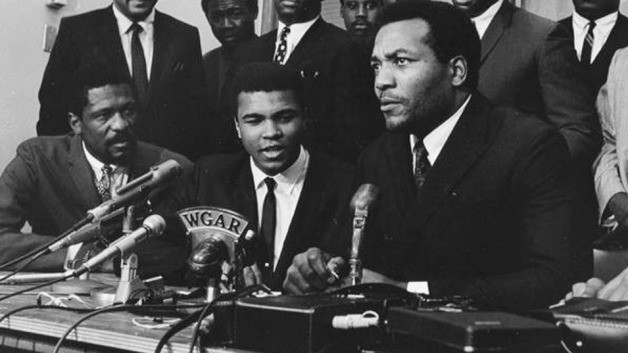
Before he became known for “The Fight of the Century” with undefeated champion Joe Frazier and his “Rumble in the Jumble” with George Foreman, Muhammad Ali, née Cassius Clay, had already made headlines: He was convicted and sentenced on June 20, 1967, to five years in prison and fined $10,000 for violating Selective Service laws for refusing to be drafted into the U.S. Army during the Vietnam War. Lawyers for the world heavyweight champion, then 25 years old, who had become a Muslim in 1967, argued that as a minister of his faith he was exempt.
The all-white jury of six men and six women took only 20 minutes to deliberate and no one was surprised by their verdict, The New York Times reported at the time. Clay appealed the felony conviction, which the U.S. Supreme Court overturned in 1971 by a vote of 8-0, with the court’s only African-American, Justice Thurgood Marshall, abstaining.
Many know Ali for his boxing successes.
Comments Are Welcome
Note: We moderate submissions in order to create a space for meaningful dialogue, a space where museum visitors – adults and youth –– can exchange informed, thoughtful, and relevant comments that add value to our exhibits.
Racial slurs, personal attacks, obscenity, profanity, and SHOUTING do not meet the above standard. Such comments are posted in the exhibit Hateful Speech. Commercial promotions, impersonations, and incoherent comments likewise fail to meet our goals, so will not be posted. Submissions longer than 120 words will be shortened.
See our full Comments Policy here.