This Day in Black History: Detroit Race Riot
Share
Explore Our Galleries









Breaking News!
Today's news and culture by Black and other reporters in the Black and mainstream media.
Ways to Support ABHM?
From the African American Registry
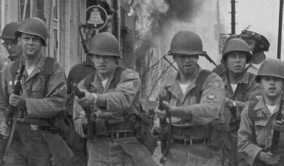
On this date in 1967, the Detroit rebellion occurred. The summer of that year was a turbulent time in American history, “the worst year for riots in the United States,” with 165 uprisings taking place.
The Detroit uprising began near 12th Street and Clairmount in a predominantly Black, overcrowded, low-income neighborhood. Early on the morning of July 23, 1967, Detroit police raided a blind pig (a speak-easy), which was illegally selling alcohol after hours. A crowd gathered as those arrested were put in a police wagon. Unrest erupted and quickly spread. Detroit Mayor Jerome P. Cavanagh asked Governor George Romney to send in the State Police. Cavanagh later authorized Romney to call in the National Guard.
It took 17,000 army forces, the Michigan National Guard, and Detroit police two days to subdue the rebellion. The effects of the unrest were enormous: 43 people died, 1,700 stores were looted, 7,231 people were arrested, 1,383 buildings were burned, and property valued at about $50 million was damaged.
Read more of the story here.
Some people avoid the term “race riot.” For example, we now refer to the Tulsa Race Massacre to reflect the victims.
Comments Are Welcome
Note: We moderate submissions in order to create a space for meaningful dialogue, a space where museum visitors – adults and youth –– can exchange informed, thoughtful, and relevant comments that add value to our exhibits.
Racial slurs, personal attacks, obscenity, profanity, and SHOUTING do not meet the above standard. Such comments are posted in the exhibit Hateful Speech. Commercial promotions, impersonations, and incoherent comments likewise fail to meet our goals, so will not be posted. Submissions longer than 120 words will be shortened.
See our full Comments Policy here.