This Date in History: Henry Bibb, Author, and Emigration Advocate born
Share
Explore Our Galleries









Breaking News!
Today's news and culture by Black and other reporters in the Black and mainstream media.
Ways to Support ABHM?
From the African American Registry
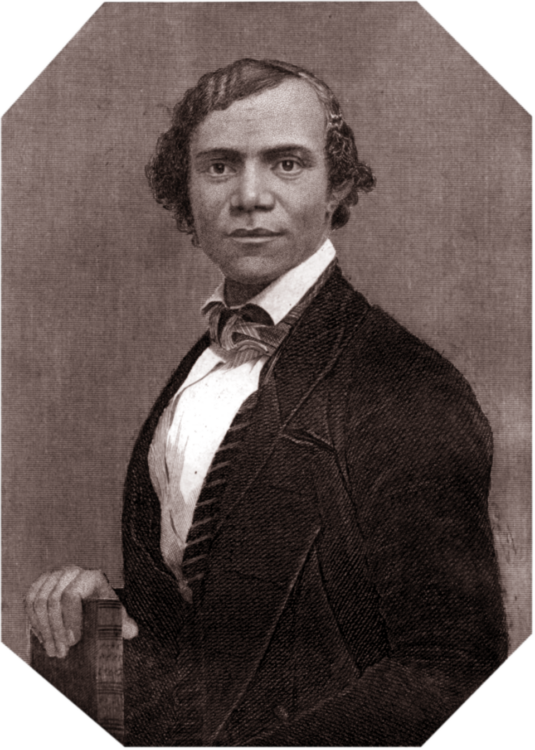
This date marks the birth of Henry Bibb in 1815. He was a Black author, editor, abolitionist, and advocate of emigration from the United States.
Born a slave on a Kentucky plantation, Henry Walton Bibb was the oldest son of Mildred Jackson. Unlike many slaves who never knew their fathers, he was told he was the son of state senator James Bibb. His six brothers were sold individually until the entire family was scattered. In 1833, he met and married a Mulatto slave named Malinda, with whom he had one daughter, Mary Frances. For the sake of eventually saving his family, Bibb attempted to escape slavery several times.
In 1842, he successfully fled to Detroit and began working as an abolitionist; though he tried several times, he never found his wife and daughter. In 1850, he published one of the best-known slave narratives, “Narrative of the Life and Adventures of Henry Bibb, an American Slave.” The Fugitive Slave Act of 1850 soon passed, and Bibb and others openly stated that they preferred death to re-enslavement. He fled with his second wife, Mary Miles Bibb, to Canada. One year later, he started the “Voice of the Fugitive,” the first Black newspaper in Canada.
This paper became a central advocate for emigration. At the same time, Bibb became involved in the Ontario community. Two years before his death, as a direct result of his work as a writer and orator, he was reunited with three of his brothers who had escaped from bondage and come to Canada. Henry Bibb died in 1854 at the age of 39.
Check out the original article.
Read a modern abortion tale.
Comments Are Welcome
Note: We moderate submissions in order to create a space for meaningful dialogue, a space where museum visitors – adults and youth –– can exchange informed, thoughtful, and relevant comments that add value to our exhibits.
Racial slurs, personal attacks, obscenity, profanity, and SHOUTING do not meet the above standard. Such comments are posted in the exhibit Hateful Speech. Commercial promotions, impersonations, and incoherent comments likewise fail to meet our goals, so will not be posted. Submissions longer than 120 words will be shortened.
See our full Comments Policy here.