These Texas teens stayed silent about racism. Then their Black principal was suspended.
Share
Explore Our Galleries









Breaking News!
Today's news and culture by Black and other reporters in the Black and mainstream media.
Ways to Support ABHM?
By Hannah Natanson, Washington Post
Photos and video by Nitashia Johnson
At Colleyville Heritage High, students rushed to defend James Whitfield, who has been accused of embracing critical race theory and is in danger of being fired.
COLLEYVILLE, Tex. — Just after 11 a.m. on a steamy Thursday in September, when Sean Vo should have been heading to AP Statistics, the 18-year-old shut his laptop, zipped his backpack and walked out of school.
All around him, in the well-appointed brick high school that serves Sean’s affluent, mostly White, conservative hometown, other children were doing the same. Like Sean, an Asian American…, most of those leaving were students of color. Most of those staying put were White. Close to a hundred teenagers eventually streamed through the glass doors of Colleyville Heritage High School on Sept. 9, wincing at the sunlight and at the mostly White administrators lined up against a wall to watch.
They were defending James Whitfield, the first Black principal ever to lead Colleyville Heritage High. His treatment by White district officials was the reason the teens had walked out of class.
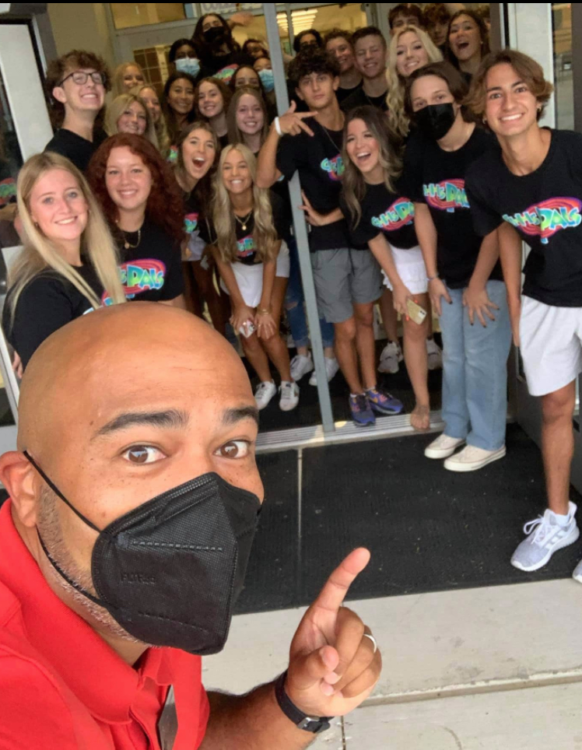
Whitfield’s job was in danger. Over the summer, White adults had accused the principal of embracing critical race theory, a decades-old academic framework that argues racism in America is systemic….
Whitfield denied the allegations against him, suggesting he was being targeted for his race and because his marriage to a White woman made some people uncomfortable….
The teens of color here had learned early on, from parents or older siblings: The way to get along in suburban Dallas-Fort Worth was to fit in with the dominant White culture. For years, that meant students of color, LGBTQ teens, those from low-income families and those of minority faiths kept quiet about their beliefs and traditions, the languages they spoke and food they ate at home and most of all about the racism, antisemitism, Islamophobia and homophobia that they experienced in school.
Most stayed silent even after George Floyd’s killing rocked America in the summer of 2020, spurring a reckoning in many places that had long avoided acknowledging racism.Story continues below advertisement
Whitfield, now 43, set out to change that, creating a diversity advisory committee with student members to elevate minority voices and give students greater input into school rules.
Read the full article here.
Read about the raging controversy around Critical Race Theory here and here.
More Breaking News here.
Comments Are Welcome
Note: We moderate submissions in order to create a space for meaningful dialogue, a space where museum visitors – adults and youth –– can exchange informed, thoughtful, and relevant comments that add value to our exhibits.
Racial slurs, personal attacks, obscenity, profanity, and SHOUTING do not meet the above standard. Such comments are posted in the exhibit Hateful Speech. Commercial promotions, impersonations, and incoherent comments likewise fail to meet our goals, so will not be posted. Submissions longer than 120 words will be shortened.
See our full Comments Policy here.