The Truth About Green Book
Share
Explore Our Galleries









Breaking News!
Today's news and culture by Black and other reporters in the Black and mainstream media.
Ways to Support ABHM?
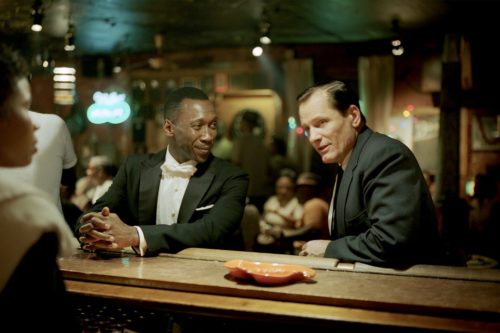
Ali and Mortensen star in Farrelly’s Green Book.
Courtesy of Universal Pictures/Participant/DreamWorks.
The feel-good, awards-friendly dramedy is built on a shaky “true story” foundation that both clarifies and exacerbates its problems, writes our film critic.
by K. Austin Collins, Vanity Fair.com
A surprising word keeps popping up on the press tour for Peter Farrelly’s Green Book. The word is “truth.”
The movie hasn’t exactly been a runaway hit—its box-office take-home has been slow but steady, with encouraging signs of growth over the past couple of weekends. Maybe awards momentum has something to do with that. Last week, the Hollywood Foreign Press Association honored Green Book with five Golden Globe nominations, in acting (for both Viggo Mortensen and Mahershala Ali), writing, direction, and for best musical/comedy. The National Board of Review had already dubbed it best picture of the year, and the American Film Institute ranked it among their top 10 for the year. Audiences at the Toronto Film Festival, meanwhile, had already given it the People’s Choice Award over a crowded lineup of movies that included Bradley Cooper’s A Star Is Born.
Some of that is undoubtedly thanks to the movie’s subject matter—and its veneer of truthfulness. “There’s a lot of stories about racism that have been told, are being told, and should still be told,” said Nick Vallelonga, one of the film’s screenwriters, in one interview. “It happened to my father the way it happened.” Vallelonga is son of the film’s protagonist, Tony “Lip” Vallelonga—an Italian-American bouncer played by Mortensen who gets hired to escort a black pianist, Dr. Don Shirley (Ali), on a tour of the Jim Crow South in 1962. They travel in a delectably suave teal Cadillac befitting Shirley’s kingly stature and brisk demeanor.
The idea is that though Shirley is an esteemed cultural figure, this status won’t mean much to the era’s “sundown towns”—all-white municipalities with strict legal and social codes dictating who belongs. Tony Lip is there for protection. “I don’t want to manipulate that,” Nick Vallelonga said of his approach to the script. “I don’t want to do anything but the truth.”
So Green Book isn’t merely inspired by history, we’re told, or based on a true story: it is the “true story,” written by family, and furthermore, it depicts a “true friendship…”
Read full article here.
More about the Green Book here and here.
Experience the Smithsonian Institution’s virtual Green Book exhibit here.
More Breaking news here.
View more galleries from the ABHM here.
Comments Are Welcome
Note: We moderate submissions in order to create a space for meaningful dialogue, a space where museum visitors – adults and youth –– can exchange informed, thoughtful, and relevant comments that add value to our exhibits.
Racial slurs, personal attacks, obscenity, profanity, and SHOUTING do not meet the above standard. Such comments are posted in the exhibit Hateful Speech. Commercial promotions, impersonations, and incoherent comments likewise fail to meet our goals, so will not be posted. Submissions longer than 120 words will be shortened.
See our full Comments Policy here.