The panic over critical race theory is an attempt to whitewash U.S. history
Share
Explore Our Galleries









Breaking News!
Today's news and culture by Black and other reporters in the Black and mainstream media.
Ways to Support ABHM?
By Kimberlé Crenshaw, Washington Post
The nation’s summer holiday season was refreshed this year with the addition of Juneteenth National Independence Day a few weeks before the Fourth of July. The day symbolizes the end of enslavement in the United States, and its place on the federal calendar was won in large part thanks to the energy of the broad movement that emerged last year in response to the murder of George Floyd.
The speed and virtual unanimity with which June 19 joined July 4 might seem to foretell a new reckoning with America’s brutally racist past, spurred on by 2020’s push to confront injustice. Yet instead of a new era of honesty and critical inquiry, the United States is being dragged into a moral panic about anti-racism itself, as agitated parents, right-wing activists and red-state lawmakers rail against their version of critical race theory. Their assault would allow only for a “history” that holds no contemporary consequences; racism ended in the past, according to the developing backlash, and we would all be better off if we didn’t try to connect it to the present.
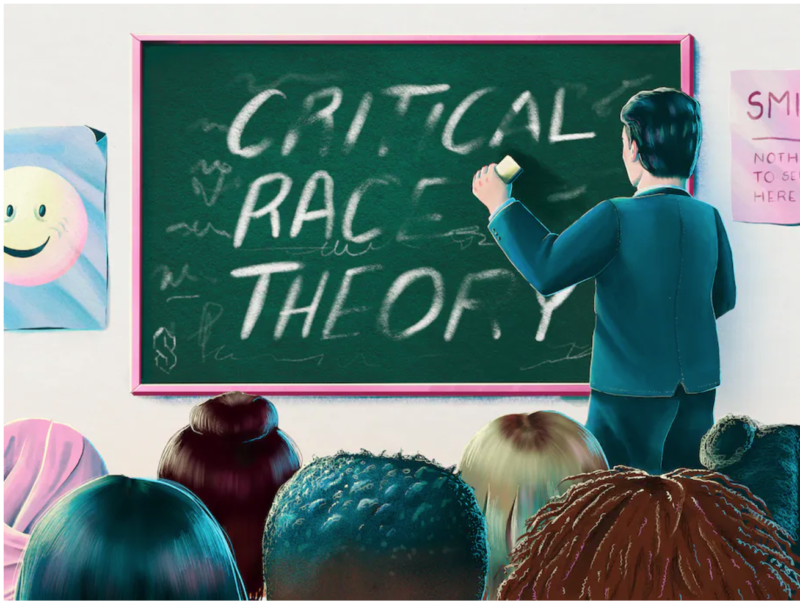
So in the same week when Juneteenth became a national holiday, schoolteachers in Texas, where the commemoration originally marked the end of slavery in that state, could teach about these events only at their peril: Texas now precludes any teacher from exploring the state’s own history of enslavement if any student should “feel discomfort, guilt, [or] anguish . . . on account of the individual’s race or sex.” On the federal level, the same Republican senators who voted for the Juneteenth holiday also demanded that the Education Department end its effort to encourage schools to fully explore the history of enslavement, saying the push involved “divisive, radical, and historically-dubious buzzwords and propaganda.”…
Those who want to expand our nation’s literacy about our racial past and those who wish it to remain illegible to all but a determined few do agree on one thing: that examining our history has consequences. The disagreement becomes volatile when those who embrace America’s promises ask that we take up the truths of our history, while critics claim it is only patriotic to perpetuate a lie. (Martin Luther King Jr. warned of just this sort of turn more than 50 years ago, in “Where Do We Go From Here: Chaos or Community?,” his final book before he was murdered: “In the days ahead we must not consider it unpatriotic to raise certain basic questions about our national character.”) Theirs is not a debate about ideas but rather an attempt — on behalf of the racially inequitable status quo — to shut down debate altogether.
Kimberlé Crenshaw is executive director of the African American Policy Forum and professor of law at UCLA and Columbia Law School.
Read the full article here.
Learn more about Critical Race Theory here and its opponents here and here.
Read the bill banning anti-racist and anti-sexist education in schools currently being considered by Wisconsin legislators as of Independence Day 2021 here.
More Breaking News here.
Comments Are Welcome
Note: We moderate submissions in order to create a space for meaningful dialogue, a space where museum visitors – adults and youth –– can exchange informed, thoughtful, and relevant comments that add value to our exhibits.
Racial slurs, personal attacks, obscenity, profanity, and SHOUTING do not meet the above standard. Such comments are posted in the exhibit Hateful Speech. Commercial promotions, impersonations, and incoherent comments likewise fail to meet our goals, so will not be posted. Submissions longer than 120 words will be shortened.
See our full Comments Policy here.