The Exception to Exceptionalism: Why marginalized communities feel a collective guilt in America
Share
Explore Our Galleries









Breaking News!
Today's news and culture by Black and other reporters in the Black and mainstream media.
Ways to Support ABHM?
By Reggie Jackson, Milwaukee Independent
“Black people had called the police again and again on [Jeffrey] Dahmer, and the cops looked the other way. Once they even returned one of his victims. So Black people looked at how little the police cared about their lives and said, “Reagan took all our jobs. Congress took our programs, and now white people are literally eating us, and you’re still not doing anything.” And even today, if you look up Jeffrey Dahmer, people don’t realize that he largely preyed on People of Color, especially Black people. So the lack of concern about Black lives has been visible forever, but Black Lives Matter was the moment where the system’s treatment of Black men caught the national attention because a lot of people who didn’t care about police brutality, didn’t care about young black men, didn’t care about people they perceived as criminals said,” Oh, wait a minute. Next it’s going to be me.” – Heather Cox Richardson, “Voter Suppression in U.S. Elections”
When the federal building in Oklahoma City was bombed in 1995, the authorities and all media outlets immediately blamed it on “Islamic terrorists.” Members of the Muslim community around the country were attacked, verbally and physically.
All Muslims and people assumed to be Muslim or Middle Eastern “looking” collectively were held liable for the attack. When it was discovered that the bombers were two White men, there was no subsequent verbal or physical attacks on White people.
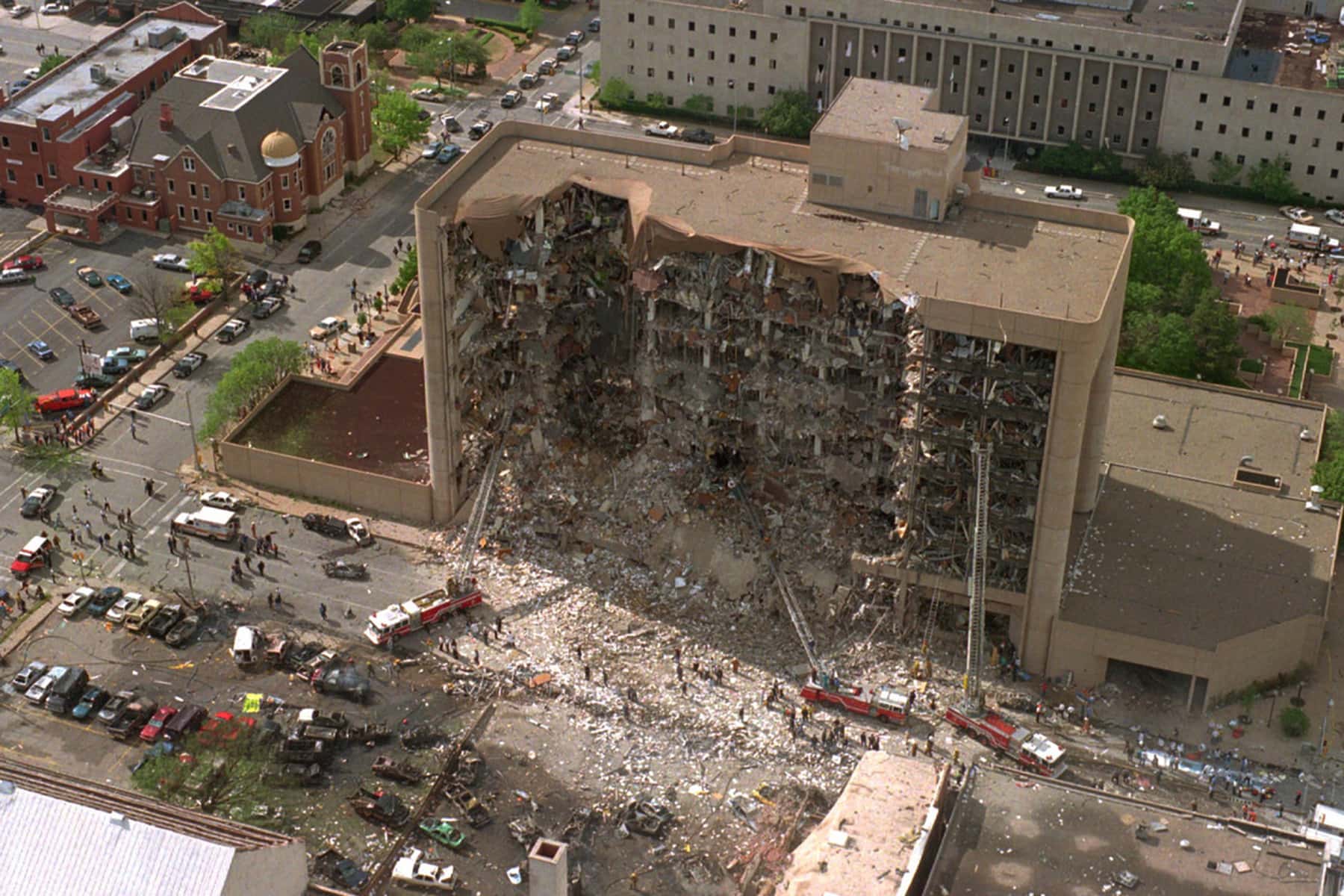
The aftermath of the Oklahoma City Bombing.
…When Black people protest and one sets a building on fire, all Black people are blamed collectively.
Collective guilt is something that we see consistently in this nation by marginalized communities. As individuals, our actions are liable to be used to function as a collective group action. We are all made to feel guilty for the actions of individuals when the action is something negative but not when it is something positive.
I hear all the time Black people cringing when a crime occurs and Blacks say “I hope it wasn’t a Black person.” We cannot function as individuals without some collective guilt being fostered upon us by the greater society.
For White people the rules are generally the opposite. When a White person like Dylan Roof, Jeffrey Dahmer, Timothy McVeigh, Ted Bundy and others in the White community commit horrific acts White people do not have to accept collective guilt. Whites are not forced to answer for these individuals.
Read the full article here.
Read more about roadblocks for the Black community here.
Comments Are Welcome
Note: We moderate submissions in order to create a space for meaningful dialogue, a space where museum visitors – adults and youth –– can exchange informed, thoughtful, and relevant comments that add value to our exhibits.
Racial slurs, personal attacks, obscenity, profanity, and SHOUTING do not meet the above standard. Such comments are posted in the exhibit Hateful Speech. Commercial promotions, impersonations, and incoherent comments likewise fail to meet our goals, so will not be posted. Submissions longer than 120 words will be shortened.
See our full Comments Policy here.