The 2025 Met Gala will honor the Black dandy and all his complications
Share
Explore Our Galleries









Breaking News!
Today's news and culture by Black and other reporters in the Black and mainstream media.
Ways to Support ABHM?
By Robin Givhan, Washington Post
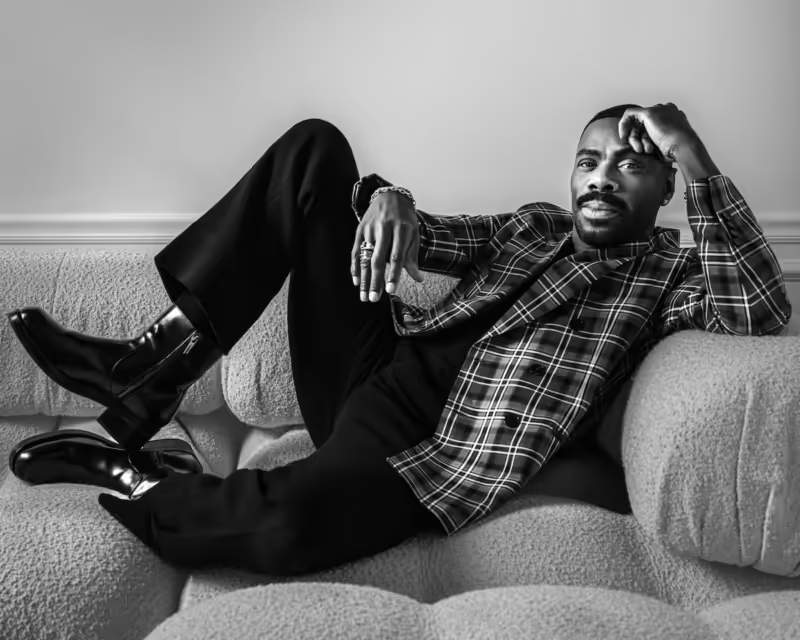
It’s been 20 years since the Metropolitan Museum of Art dedicated one of its costume exhibitions to the attire of men, and that was “Braveheart: Men in Skirts.” And it has never focused an exhibition squarely on the subject of race. But its Costume Institute show — the one that regularly opens on the first Monday in May with a gala bedazzled with actors, musicians, politicians and famously famous people — will examine the complicated story of the Black dandy. The Costume Institute is not known for leaping into the cultural fray, but with “Superfine: Tailoring Black Style,” it’s jumping into the deep end. The Black dandy is a locus of our ambivalence about race, gender, class and masculinity.
Most anyone can conjure up an image of an outré dandy: Prince with his ruffles and velvet; Andre 3000 during his hip-hop heyday with the dapper hats, the bold glasses and the cacophony of colors; fashion editor André Leon Talley with his floor-length bespoke caftans. Some might insist that they were all examples of frivolousness and superficiality. Others admire them for their creativity and personal grandeur.
But a dandy is not merely a man who indulges in ostentatious attire; it’s someone engaged in “a negotiation of identity,” said Monica L. Miller, guest curator for the exhibition. This negotiation is what makes the figure so fraught, so powerful, so destabilizing. And in this country, we are in the thick of ongoing negotiations about who everyone is allowed to be.
“It’s a big moment for the country. For acknowledging where we are and where we want to be. … We’re at a crossroads as we think through what it means for all of us to be here together,” Miller said. “I’m happy that we can talk about complicated history, about slavery, and revolution.”
The Washington Post has more.
Learn more about Black history in our virtual exhibits.
Comments Are Welcome
Note: We moderate submissions in order to create a space for meaningful dialogue, a space where museum visitors – adults and youth –– can exchange informed, thoughtful, and relevant comments that add value to our exhibits.
Racial slurs, personal attacks, obscenity, profanity, and SHOUTING do not meet the above standard. Such comments are posted in the exhibit Hateful Speech. Commercial promotions, impersonations, and incoherent comments likewise fail to meet our goals, so will not be posted. Submissions longer than 120 words will be shortened.
See our full Comments Policy here.