Supreme Court strikes down college affirmative action programs
Share
Explore Our Galleries









Breaking News!
Today's news and culture by Black and other reporters in the Black and mainstream media.
Ways to Support ABHM?
By Lawrence Hurley, NBC News
The ruling is the culmination of decades of effort to end the consideration of race in admissions.
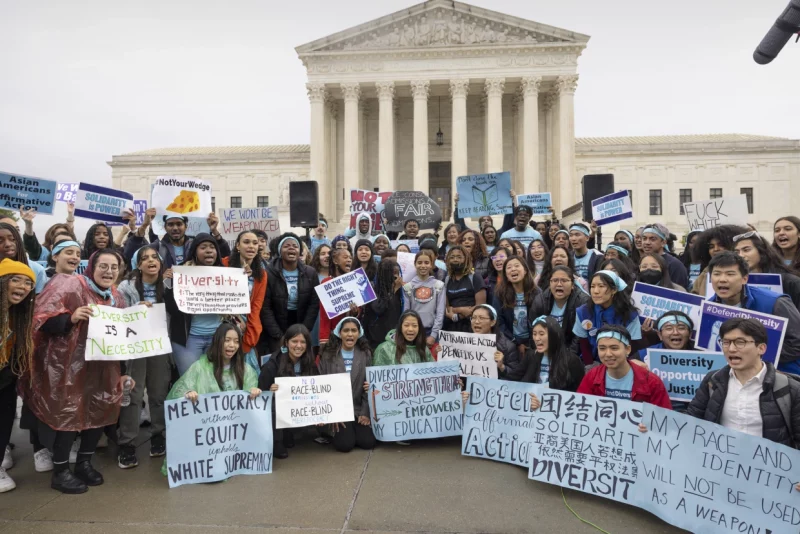
WASHINGTON — The Supreme Court on Thursday struck down affirmative action programs at the University of North Carolina and Harvard in a major victory for conservative activists, ending the systematic consideration of race in the admissions process.
The court ruled that both programs violate the Equal Protection Clause of the Constitution and are therefore unlawful. The vote was 6-3 in the UNC case and 6-2 in the Harvard case, in which liberal Justice Ketanji Brown Jackson was recused.
The decision was hailed by prominent conservatives, who say the Constitution should be “colorblind,” with former President Donald Trump calling it “a great day for America.” Liberals, however, condemned the ruling, saying affirmative action is a key tool for remedying historic race discrimination.
“It wasn’t perfect, but there’s no doubt that it helped offer new ladders of opportunity for those who, throughout our history, have too often been denied a chance to show how fast they can climb,” said Michelle Obama, the first Black first lady.
President Joe Biden called the decision a “severe disappointment,” adding that his administration would provide guidance about how colleges could maintain diversity without violating the ruling.
The original article has more details.
Affirmative action has been credited with changing lives.
Comments Are Welcome
Note: We moderate submissions in order to create a space for meaningful dialogue, a space where museum visitors – adults and youth –– can exchange informed, thoughtful, and relevant comments that add value to our exhibits.
Racial slurs, personal attacks, obscenity, profanity, and SHOUTING do not meet the above standard. Such comments are posted in the exhibit Hateful Speech. Commercial promotions, impersonations, and incoherent comments likewise fail to meet our goals, so will not be posted. Submissions longer than 120 words will be shortened.
See our full Comments Policy here.