‘Supermarket Redlining’: Why Black Families Pay More for Food
Share
Explore Our Galleries









Breaking News!
Today's news and culture by Black and other reporters in the Black and mainstream media.
Ways to Support ABHM?
By Jennifer Porter Gore, Word in Black
Community disinvestment, food deserts, and possible food industry price-gouging have a disproportionate number of Black households grappling with food insecurity.
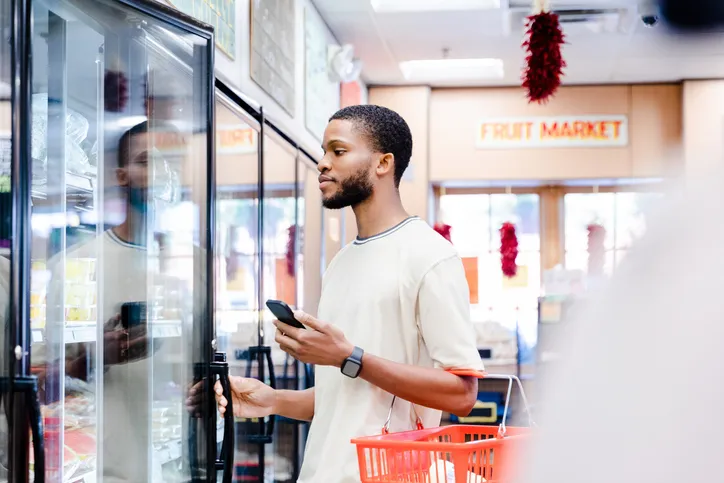
Anyone wondering why it feels like grocery shopping requires taking out a small loan isn’t imagining things. Grocery prices, which soared due to pandemic-era inflation, are still just too blankity-blanking high, and the federal government suspects food producers might be engaged in some lucrative price-gouging.
But for Black consumers, decades of supermarket redlining, disinvestment and racially-driven urban planning have put them in an even tighter financial squeeze in the grocery-store checkout lines.
Experts say Black households, on average, pay disproportionately higher prices than whites at the checkout line, with few options for bargain-hunting in food deserts and less access to fresh, nutritious food. Coupled with chronically high, post-pandemic inflation and food producers’ continued price spikes, they say, Black households are at greater risk of food insecurity than whites.
Although whites make up the bulk of the food-insecure population in the U.S. “food insecurity rates among Black individuals and Latino individuals exceed those of White individuals” nationwide, according to a report by Feeding America, a nonprofit. “These disparities are an example of how historical, social, economic and environmental factors have held many communities of color back, creating barriers to food security.”
[…]
Researchers say that, for decades, Black households have consistently been twice as likely as white households to experience food insecurity, and this trend continued in 2022, the latest year for available data. More than 1 in 5 Black families grappled with hunger, while around 1 in 10 white households did.
Continue the article to identify the reasons experts cite for this food insecurity disparity.
Read about the Black women working to end food insecurity.
Find more breaking news like this.
Comments Are Welcome
Note: We moderate submissions in order to create a space for meaningful dialogue, a space where museum visitors – adults and youth –– can exchange informed, thoughtful, and relevant comments that add value to our exhibits.
Racial slurs, personal attacks, obscenity, profanity, and SHOUTING do not meet the above standard. Such comments are posted in the exhibit Hateful Speech. Commercial promotions, impersonations, and incoherent comments likewise fail to meet our goals, so will not be posted. Submissions longer than 120 words will be shortened.
See our full Comments Policy here.