Special News Series: Rising Up For Justice! – The Rich History of African American Activism in WI
Share
Explore Our Galleries









Breaking News!
Today's news and culture by Black and other reporters in the Black and mainstream media.
Ways to Support ABHM?
Introduction To This Series:
This post is one installment in an ongoing news series: a “living history” of the current national and international uprising for justice.
Today’s movement descends directly from the many earlier civil rights struggles against repeated injustices and race-based violence, including the killing of unarmed Black people. The posts in this series serve as a timeline of the uprising that began on May 26, 2020, the day after a Minneapolis police officer killed an unarmed Black man, George Floyd, by kneeling on his neck. The viral video of Floyd’s torturous suffocation brought unprecedented national awareness to the ongoing demand to truly make Black Lives Matter in this country.
The posts in this series focus on stories of the particular killings that have spurred the current uprising and on the protests taking place around the USA and across the globe. Sadly, thousands of people have lost their lives to systemic racial, gender, sexuality, judicial, and economic injustice. The few whose names are listed here represent the countless others lost before and since. Likewise, we can report but a few of the countless demonstrations for justice now taking place in our major cities, small towns, and suburbs.
To view the entire series of Rising Up for Justice! posts, insert “rising up” in the search bar above.
The Rich History of African American Activism in Wisconsin
By Reggie Jackson, U.S. News
September 2, 2020
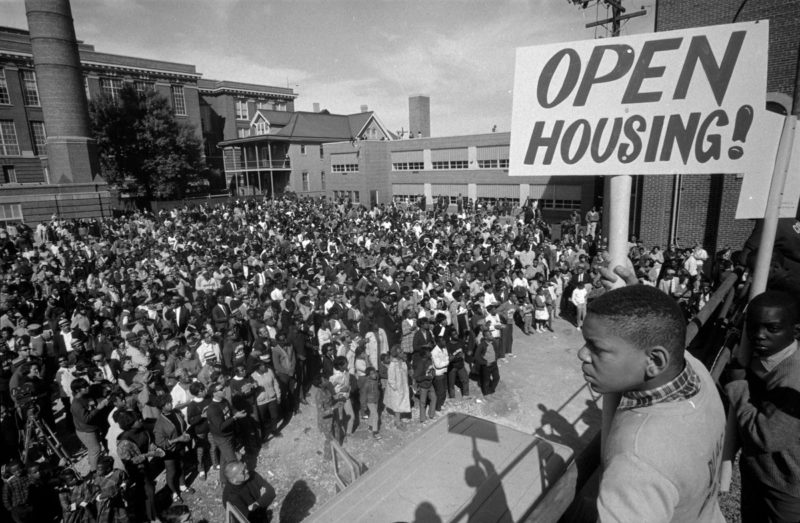
(Photo courtesy of Milwaukee Journal Sentinel and Historic Photo Collection, Milwaukee Public Library)
AS THE EVENTS IN Kenosha, Wisconsin, played out for a national audience in the wake of the shooting of Jacob Blake, many reports missed the opportunity to discuss the long trajectory of protest movements by African Americans in the state’s history…
While Blake’s shooting is heart-wrenching, it didn’t come as a shock to me and to many of Wisconsin’s Black Lives Matter activists. As a historian, I know all too well that Black men in the state have a long record of dying at the hands of police in questionable circumstances.
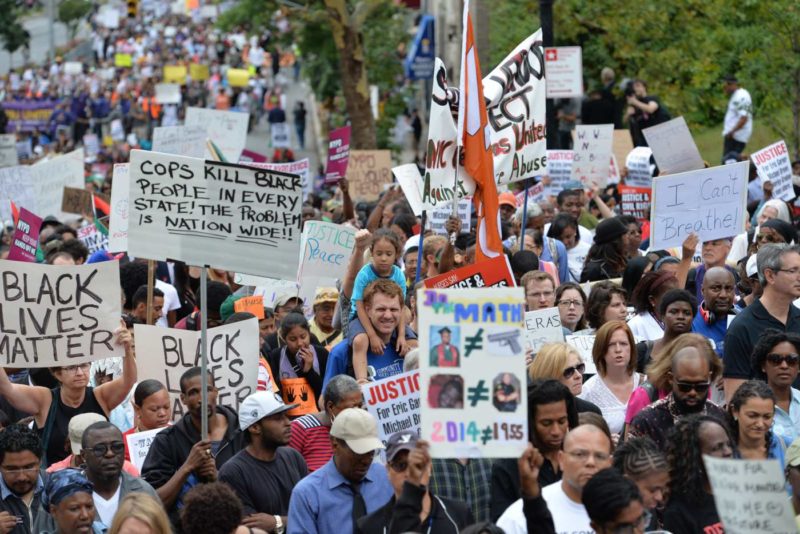
Though today’s demonstrations in Kenosha are distinctly modern, with activists holding Black Lives Matters signs and cellphones recording violence as it unfolds, Wisconsin’s protests for racial justice have roots starting in the 19th century.
In 1859, Wisconsin gained fame by being the first state to defy the federal Fugitive Slave Law. Just years before, in 1854, an escaped slave named Joshua Glover was rescued by abolitionists from the jail in Milwaukee after being arrested in Racine, Wisconsin.
About a hundred years later, in the 1960s, racial justice advocates would once again make waves in the state…
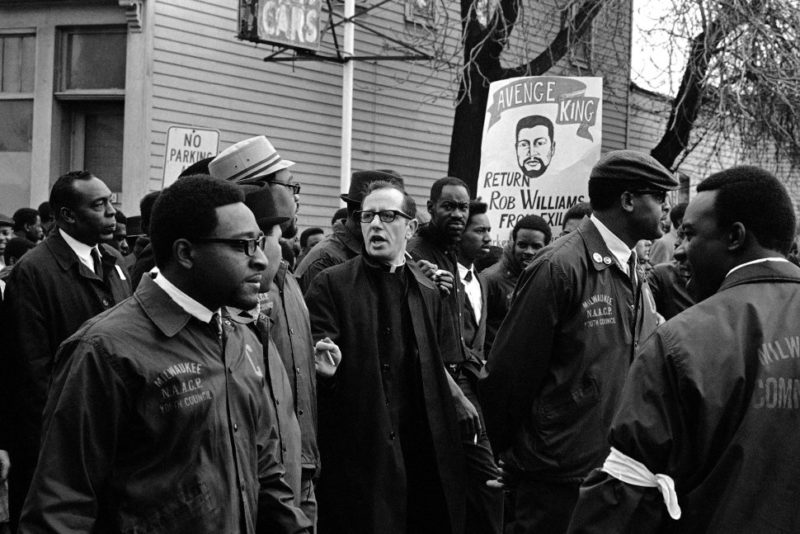
Over a period of 200 consecutive days, beginning on August 28, 1967, local activists spurred by Alderwoman Vel Phillips and led by Roman Catholic Priest James Groppi and members of the Milwaukee Youth Council of the National Association of Colored People, marched for open housing. They were met by a throng of 8,000 angry whites intent on keeping their neighborhood all-white…
More Breaking News here.
Explore the ABHM galleries here.
Comments Are Welcome
Note: We moderate submissions in order to create a space for meaningful dialogue, a space where museum visitors – adults and youth –– can exchange informed, thoughtful, and relevant comments that add value to our exhibits.
Racial slurs, personal attacks, obscenity, profanity, and SHOUTING do not meet the above standard. Such comments are posted in the exhibit Hateful Speech. Commercial promotions, impersonations, and incoherent comments likewise fail to meet our goals, so will not be posted. Submissions longer than 120 words will be shortened.
See our full Comments Policy here.