Special News Series: Rising Up For Justice! – ‘MLK/FBI’ Director Sam Pollard on Filmmaking After BLM: ‘You’ve Got to Keep Pushing’
Share
Explore Our Galleries









Breaking News!
Today's news and culture by Black and other reporters in the Black and mainstream media.
Ways to Support ABHM?
Introduction To This Series:
This post is one installment in an ongoing news series: a “living history” of the current national and international uprising for justice.
Today’s movement descends directly from the many earlier civil rights struggles against repeated injustices and race-based violence, including the killing of unarmed Black people. The posts in this series serve as a timeline of the uprising that began on May 26, 2020, the day after a Minneapolis police officer killed an unarmed Black man, George Floyd, by kneeling on his neck. The viral video of Floyd’s torturous suffocation brought unprecedented national awareness to the ongoing demand to truly make Black Lives Matter in this country.
The posts in this series focus on stories of the particular killings that have spurred the current uprising and on the protests taking place around the USA and across the globe. Sadly, thousands of people have lost their lives to systemic racial, gender, sexuality, judicial, and economic injustice. The few whose names are listed here represent the countless others lost before and since. Likewise, we can report but a few of the countless demonstrations for justice now taking place in our major cities, small towns, and suburbs.

To view the entire series of Rising Up for Justice! posts, insert “rising up” in the search bar above.
‘MLK/FBI’ Director Sam Pollard on Documentary Filmmaking After Black Lives Matter: ‘You’ve Got to Keep Pushing’
By Damon Wise, Variety
November 29, 2020
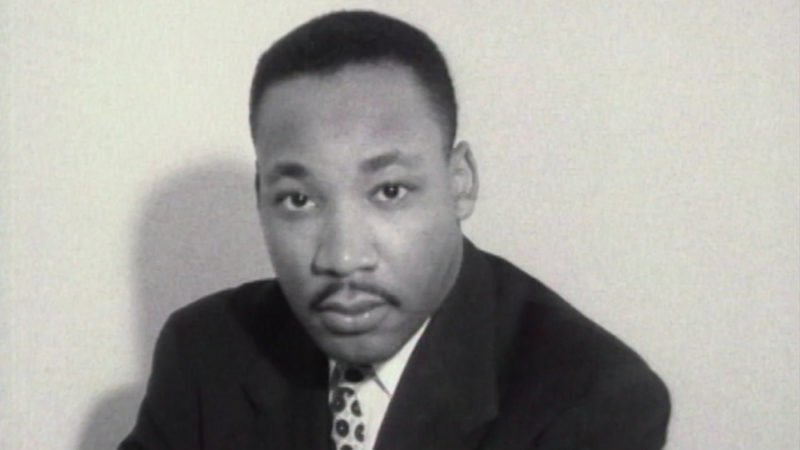
Sam Pollard’s “MLK/FBI” follows the dirty war that America’s FBI declared on civil rights figurehead Martin Luther King, a vendetta that began in the 50s and ended with his assassination in 1968, inspired by recent revelations (as well as credible long-held suspicions), and backed up by declassified secret government documents. Documentary festival IDFA, which runs until Dec. 6, selected the title in their Masters section.
Welcoming Pollard, an Oscar nominee and three-time Emmy winner, to the festival, IDFA artistic director Orwa Nyrabia wondered why the African-American director had taken so long to get round to this subject, given his well-known passion for documenting the injustices of the civil rights era (although he has a directing and producing career in his own right, spanning 30 years, Pollard’s Oscar nomination was for editing Spike Lee’s blistering 1997 film “4 Little Girls”). The director welcomed the question, noting that sometimes a story can “be right in front of you, but you’re not quite sure when it should be put into production, when it should be told.”
“I had spent a lot of time,” he explained, “doing films about the civil rights movement, working from [his debut] ‘Eyes on the Prize’ [1990], to ‘The Rise and Fall of Jim Crow’ [2002], to ‘Slavery by Another Name’ [2012]. But I had never thought about looking into the relationship that J. Edgar Hoover and the FBI had in terms of trying to undercut and destroy Dr. King’s reputation. And it wasn’t until 2017 when my producer Ben Hedin read this book by David Garrow about the FBI and Martin Luther King that, all of a sudden, it became clear to him—and to myself—that this should be a film…”
Nyrabia noted that the bogeymen of Dr. King’s time—communists, socialists—have resurfaced in the modern discourse of right-wing America, despite the collapse of the Cold War in the meantime. “I saw the connection immediately,” said Pollard. “To think, here we are in 2020, and America still is raising this idea of the flag of communism, socialism—that we should be frightened of it, that it’s going to destroy American democracy and American capitalism. What’s funny about that is that, in the 1930s, when F.D.R. became president of the United States, he introduced America to social security, which is a form of socialism. But if you told an American that today, they would say, ‘Are you [crazy]?’ So in some ways it’s sad that America still pulls out these same tropes that they used against Dr. King and others in the 50s and 60s—the red scourge…”
Read the full article here.
More Breaking News here.
Explore the ABHM galleries here.
Comments Are Welcome
Note: We moderate submissions in order to create a space for meaningful dialogue, a space where museum visitors – adults and youth –– can exchange informed, thoughtful, and relevant comments that add value to our exhibits.
Racial slurs, personal attacks, obscenity, profanity, and SHOUTING do not meet the above standard. Such comments are posted in the exhibit Hateful Speech. Commercial promotions, impersonations, and incoherent comments likewise fail to meet our goals, so will not be posted. Submissions longer than 120 words will be shortened.
See our full Comments Policy here.