Special News Series: Rising Up For Justice! – Judicial Inquiry Begins in Eric Garner Case, 7 Years After His Death
Share
Explore Our Galleries









Breaking News!
Today's news and culture by Black and other reporters in the Black and mainstream media.
Ways to Support ABHM?
Introduction To This Series:
This post is one installment in an ongoing news series: a “living history” of the current national and international uprising for justice.
Today’s movement descends directly from the many earlier civil rights struggles against repeated injustices and race-based violence, including the killing of unarmed Black people. The posts in this series serve as a timeline of the uprising that began on May 26, 2020, the day after a Minneapolis police officer killed an unarmed Black man, George Floyd, by kneeling on his neck. The viral video of Floyd’s torturous suffocation brought unprecedented national awareness to the ongoing demand to truly make Black Lives Matter in this country.
The posts in this series focus on stories of the particular killings that have spurred the current uprising and on the protests taking place around the USA and across the globe. Sadly, thousands of people have lost their lives to systemic racial, gender, sexuality, judicial, and economic injustice. The few whose names are listed here represent the countless others lost before and since. Likewise, we can report but a few of the countless demonstrations for justice now taking place in our major cities, small towns, and suburbs.
Judicial Inquiry Begins in Eric Garner Case, 7 Years After His Death
By Rachel Pilgrim, TheRoot.com
Former NYPD Officer Daniel Pantaleo has already been disciplined, but some think more public officials should be reprimanded for their role in Garner’s case.
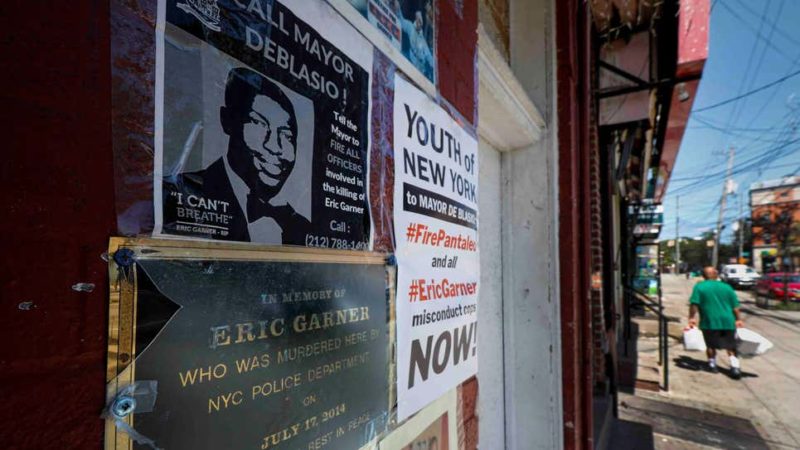
Photo: Richard Drew (AP)
Eric Garner’s final words, “I can’t breathe,” still reverberate in the streets more than seven years after his death, driven by a movement fighting for justice and accountability for victims of police brutality. On Monday, a summary judicial inquiry was opened in the case. This is a rare judicial process that allows the public to lead an investigation into public officials.
New York Police Department officer Daniel Pantaleo, who held Garner in an unauthorized chokehold in July 2014, was fired for his involvement after a department disciplinary trial in August 2019. Garner’s mother and sister, Gwen Carr and Ellisha Flagg Garner, along with other petitioners accuse the NYPD of not properly investigating and disciplining all officers in Garner’s death.
CNN reports that the inquiry will focus on the actions of NYPD officers during and after the use of force in Garner’s arrest as well as any allegations surrounding the case. New York Supreme Court Judge Erika Edwards began the proceeding by saying that no one will be criminally charged at the end of the inquiry.
“This hearing will lead to further accountability for his death and advance the cause of racial justice in our criminal justice system, both in our city and across the nation,” said Garner family attorney Alvin Bragg.
In 2015, the city agreed to pay Garner’s family $5.9 million in a settlement. However, no amount of money can match the value in holding every officer accountable for failing Garner that day.
Read the full article here.
Learn more about the murder of Eric Garner here and here.
More Breaking News here.
Comments Are Welcome
Note: We moderate submissions in order to create a space for meaningful dialogue, a space where museum visitors – adults and youth –– can exchange informed, thoughtful, and relevant comments that add value to our exhibits.
Racial slurs, personal attacks, obscenity, profanity, and SHOUTING do not meet the above standard. Such comments are posted in the exhibit Hateful Speech. Commercial promotions, impersonations, and incoherent comments likewise fail to meet our goals, so will not be posted. Submissions longer than 120 words will be shortened.
See our full Comments Policy here.