Slavery Fueled Our Climate Crisis. Here’s How Reparations Can Slow It Down.
Share
Explore Our Galleries









Breaking News!
Today's news and culture by Black and other reporters in the Black and mainstream media.
Ways to Support ABHM?
By Sage Howard, HuffPost
Addressing all the damage is going to take more than money — it’s going to take new laws and a deeper understanding of how our climate crisis came to fruition.
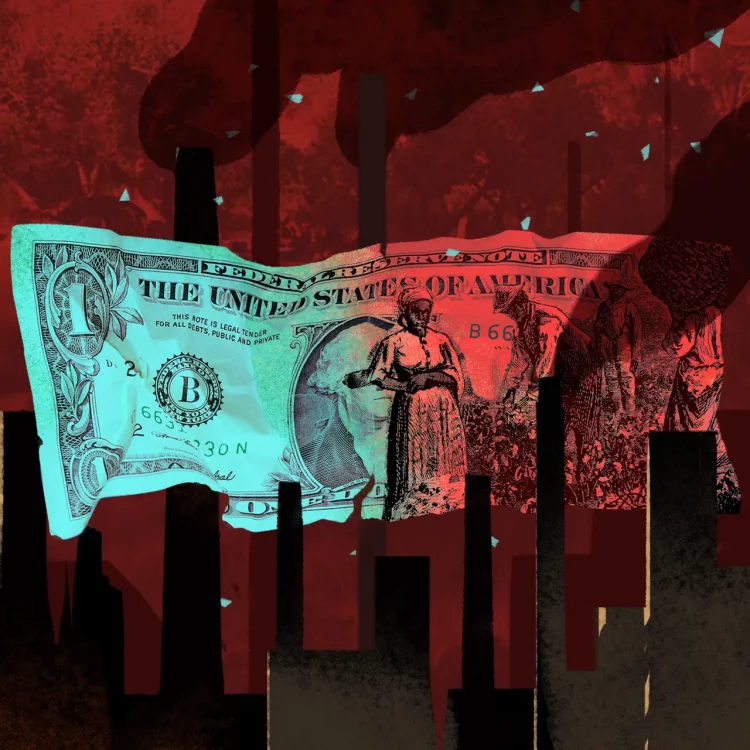
Growing up, I heard the phrase “40 acres and a mule” from all the adults in my life, usually in the context of an unkept promise. “We’re still waiting for our 40 acres,” they’d say, referring to yet another violation of our rights sprayed across the news. When I was old enough to grasp the concept, my parents explained that after the Civil War, our ancestors were promised 40 acres of land and a mule as an “apology” for forced servitude. Growing up in Brooklyn, it was obvious that neither I nor any of my community members were descendants of people who had received such an apology.
It took some time before I fully understood that there’s a nuanced relationship between climate change, colonialism, enslavement and reparations that affects all of us profoundly today. When we discuss the reasons for accelerating global warming, our conversations often focus on the corporate waste littering waterways, or emissions pumped into the ozone from factories. While these present-day practices contribute substantially to rising temperatures and more destructive and more frequent natural disasters, colonialism and chattel slavery also play a huge part. And even beginning to address this damage is going to take more than money — it’s going to take new laws and a deeper understanding of how all this damage came to fruition.
As one 2019 BBC article explains: “Enslaved people were brought [to North America] to work on the cotton, sugar and tobacco plantations. The crops they grew were sent to Europe or to the northern colonies, to be turned into finished products. Those finished goods were used to fund trips to Africa to obtain more slaves who were then trafficked back to America.” During slavery in North America, it’s believed that 40% of New York’s cotton revenue was earned by shipping companies, insurance companies and financial institutions through this very process.
This wealth, in turn, was used to facilitate the pillaging of land stolen from its stewards, Indigenous people. So in many ways, slavery allowed for unbridled greed and a rapid rise in industrialization that exploited people of color while kicking global warming into overdrive.
Fast forward to today. The economy that thrived as a result of this system is still operating at the expense of the environment and the lives of people deemed less than human. And so reparations should be thought of not just as repayment for historical wrongdoings, but as a way to fight for a sustainable future.
Read the rest of Howard’s compelling argument.
Usually, reparations are suggested in recognition of the human rights violations of slavery and discrimination.
Comments Are Welcome
Note: We moderate submissions in order to create a space for meaningful dialogue, a space where museum visitors – adults and youth –– can exchange informed, thoughtful, and relevant comments that add value to our exhibits.
Racial slurs, personal attacks, obscenity, profanity, and SHOUTING do not meet the above standard. Such comments are posted in the exhibit Hateful Speech. Commercial promotions, impersonations, and incoherent comments likewise fail to meet our goals, so will not be posted. Submissions longer than 120 words will be shortened.
See our full Comments Policy here.