Slave Trade Video Game Edited After Backlash
Share
Explore Our Galleries









Breaking News!
Today's news and culture by Black and other reporters in the Black and mainstream media.
Ways to Support ABHM?
By Derrik J. Lang, the Associated Press
LOS ANGELES (AP) — An educational video game has been edited following a social media backlash over a scene depicting slaves being packed into a ship.
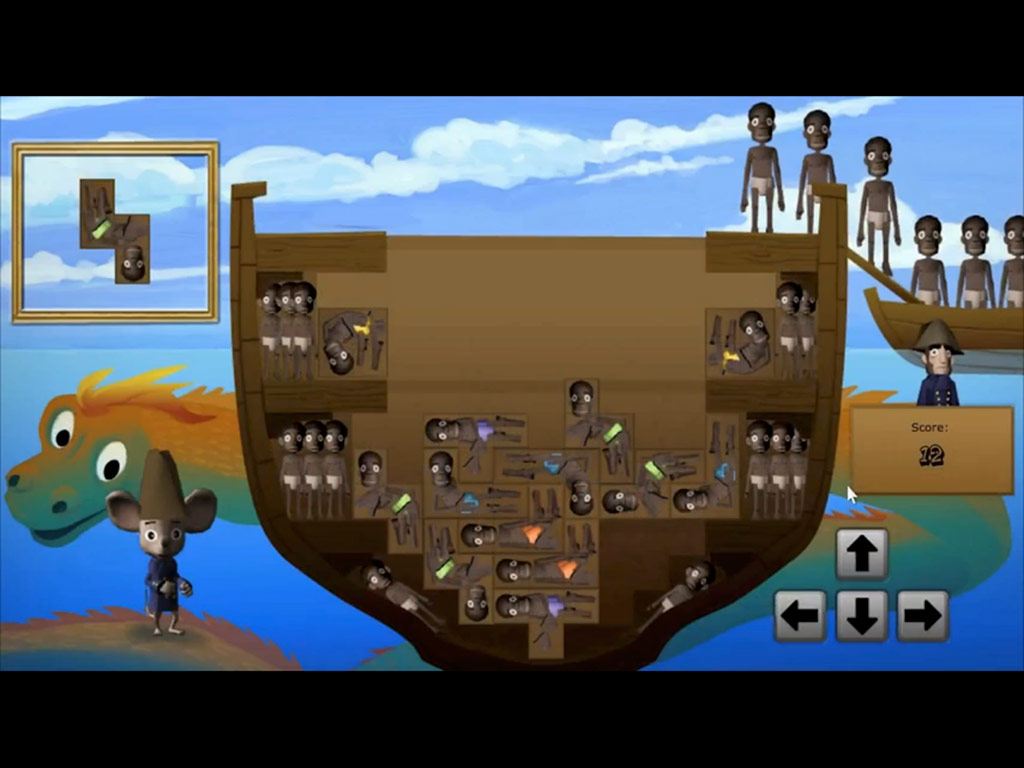
The creators of “Playing History: Slave Trade” removed a level Monday which featured black slave characters being dropped into a ship, similar to the video game “Tetris.”
“Apologies to people who were offended by us using game mechanics to underline the point of how inhumane slavery was,” read a statement posted on the game’s page on Steam, an online store. “The goal was to enlighten and educate people — not to get sidetracked discussing a small 15-second part of the game.”
The scene was also removed from the official trailer for the title, which was originally released by Copenhagen-based developer Serious Games Interactive in 2013.
The game captured attention last week when it went on sale on Steam and was promptly chastised on social media for trivializing slavery with the stacking segment…
While the “Tetris”-like slave-stacking level has been excised from the game, a talking mouse character who guides players still says at one point: “Slave traders didn’t look upon slaves as people but as a product. They therefore stacked the slaves on top of each other to get as many as possible shipped.”
Other titles in the Serious Games’ “Playing History” series include “Playing History: Vikings” and “Playing History: The Plague.”
Read the full article here.
Read more Breaking News here.
Comments Are Welcome
Note: We moderate submissions in order to create a space for meaningful dialogue, a space where museum visitors – adults and youth –– can exchange informed, thoughtful, and relevant comments that add value to our exhibits.
Racial slurs, personal attacks, obscenity, profanity, and SHOUTING do not meet the above standard. Such comments are posted in the exhibit Hateful Speech. Commercial promotions, impersonations, and incoherent comments likewise fail to meet our goals, so will not be posted. Submissions longer than 120 words will be shortened.
See our full Comments Policy here.