‘Segregated facilities’ are no longer explicitly banned in federal contracts
Share
Explore Our Galleries









Breaking News!
Today's news and culture by Black and other reporters in the Black and mainstream media.
Ways to Support ABHM?
By Selena Simmons-Duffin, NPR
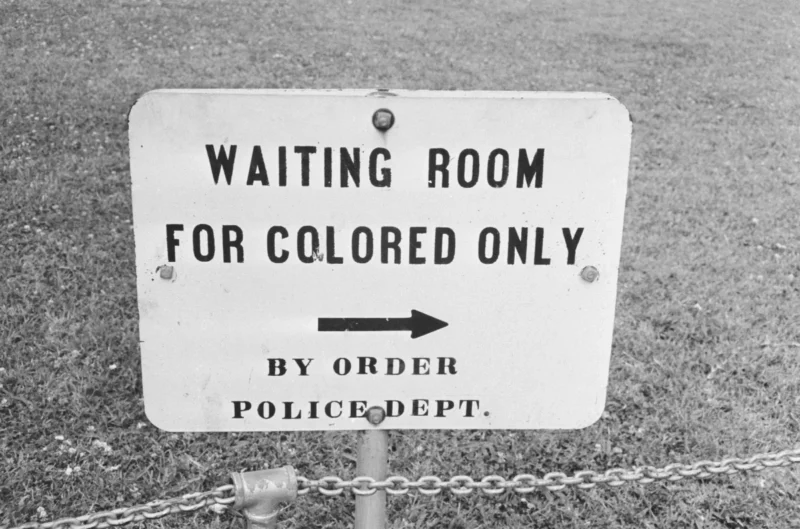
After a recent change by the Trump administration, the federal government no longer explicitly prohibits contractors from having segregated restaurants, waiting rooms and drinking fountains.
The segregation clause is one of several identified in a public memo issued by the General Services Administration last month, affecting all civil federal agencies. The memo explains that it is making changes prompted by President Trump’s executive order on diversity, equity and inclusion, which repealed an executive order signed by President Lyndon B. Johnson in 1965 regarding federal contractors and nondiscrimination. The memo also addresses Trump’s executive order on gender identity.
While there are still state and federal laws that outlaw segregation and discrimination that companies need to comply with, legal experts say this change to contracts across the federal government is significant.
“It’s symbolic, but it’s incredibly meaningful in its symbolism,” says Melissa Murray, a constitutional law professor at New York University. “These provisions that required federal contractors to adhere to and comply with federal civil rights laws and to maintain integrated rather than segregated workplaces were all part of the federal government’s efforts to facilitate the settlement that led to integration in the 1950s and 1960s.
“The fact that they are now excluding those provisions from the requirements for federal contractors, I think, speaks volumes,” Murray says.
Segregation was the law of the land during the Jim Crow era.
Check out our breaking news archive.
Comments Are Welcome
Note: We moderate submissions in order to create a space for meaningful dialogue, a space where museum visitors – adults and youth –– can exchange informed, thoughtful, and relevant comments that add value to our exhibits.
Racial slurs, personal attacks, obscenity, profanity, and SHOUTING do not meet the above standard. Such comments are posted in the exhibit Hateful Speech. Commercial promotions, impersonations, and incoherent comments likewise fail to meet our goals, so will not be posted. Submissions longer than 120 words will be shortened.
See our full Comments Policy here.