Quinta Brunson Knows Why America Was Ready for ‘Abbott Elementary’
Share
Explore Our Galleries









Breaking News!
Today's news and culture by Black and other reporters in the Black and mainstream media.
Ways to Support ABHM?
By David Marchese, New York Times
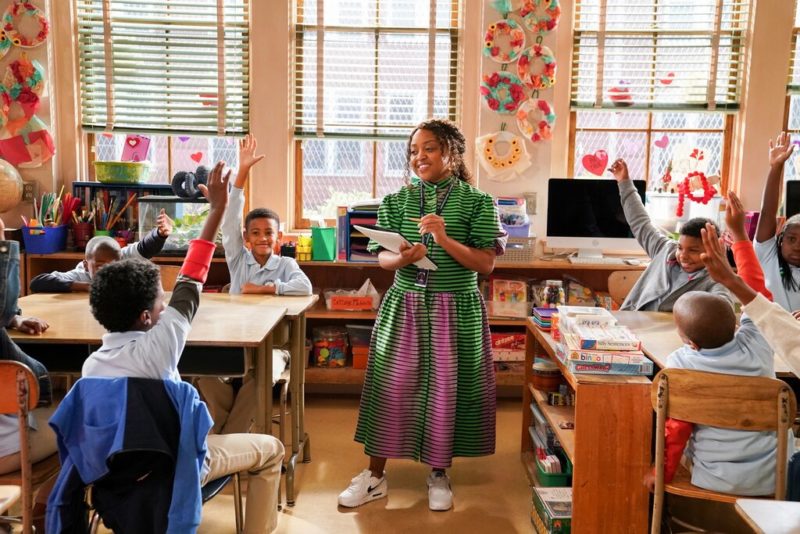
“The world,” says Quinta Brunson, “is in a crazy place.” To help push against that, to provide a little respite, Brunson “wanted to make a feel-good comedy that was 22 minutes long, that families can watch together but wasn’t corny, and could still be for everyone.” With “Abbott Elementary” — a mockumentary-style show that follows the daily defeats and victories of the teachers at an underfunded Philadelphia public school — she succeeded. A breakout hit on ABC, the show has averaged nearly four million nightly viewers per episode since premiering in December (the season finale airs April 12) and has been credited with reinvigorating the network sitcom. “So many shows had become stressful watches,” says Brunson, who is 32 and who plays the peppy second-grade teacher Janine Teagues. “I think a lot of people are enjoying having something that is light and nuanced. ‘Abbott’ came at the right time.”
What’s the “Abbott Elementary” piece of the puzzle that wasn’t there before?
’ve read that the show doesn’t sound like a Twitter timeline. People were tired of seeing their Twitterregurgitated back to them through their viewing. A lot of shows had started doing that. But people still want stories. That was important for me from the beginning of writing the show. We are talking about this school, these people in West Philly. They have a job to do. They don’t have time to sit down and have an articulate debate. I think that was refreshing for people — because the debate stuff entered television, but it’s rarely how people outside of New York and Los Angeles are talking. Then I also think that we’re giving people slice-of-life stories. We’re not talking about being Black all day. It’s a show about these people’s lives. There have been recent sitcoms — “Black-ish,” “Fresh Off the Boat” — really good sitcoms, but my generation was starting to get tired of race as the only focal point. The white shows got to just be white, but a lot of the shows with people of color were about the color of the people and not about stories of the people. So “Abbott” also feels like a shift in that way.
Quinta Brunson
Finish reading Marchese’s interview with Brunson to learn how this show has gotten Philly’s underfunded school life right.
Discover how cutting funds in one area enabled LA schools to help students and a recent project about black girlhood.
More breaking news here.
Comments Are Welcome
Note: We moderate submissions in order to create a space for meaningful dialogue, a space where museum visitors – adults and youth –– can exchange informed, thoughtful, and relevant comments that add value to our exhibits.
Racial slurs, personal attacks, obscenity, profanity, and SHOUTING do not meet the above standard. Such comments are posted in the exhibit Hateful Speech. Commercial promotions, impersonations, and incoherent comments likewise fail to meet our goals, so will not be posted. Submissions longer than 120 words will be shortened.
See our full Comments Policy here.