Prisoners Deserve to Survive Natural Disasters, Too
Share
Explore Our Galleries









Breaking News!
Today's news and culture by Black and other reporters in the Black and mainstream media.
Ways to Support ABHM?
By Kim Kelly, Yes Magazine
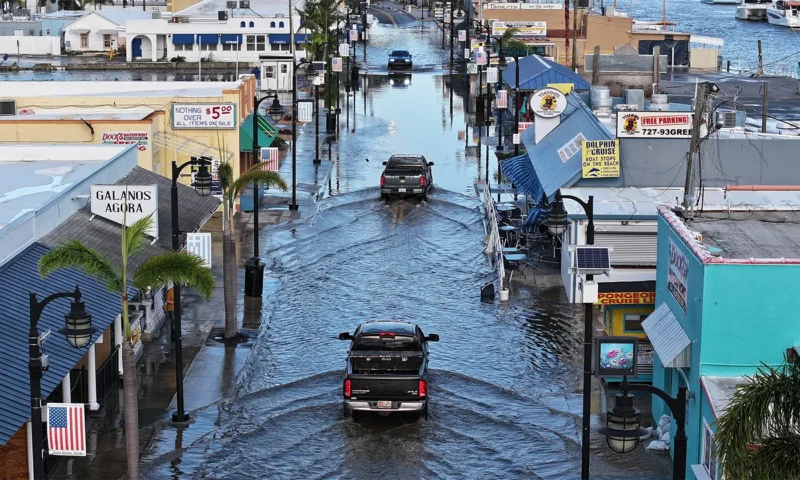
The United States have been rocked by two major hurricanes this month, Helene and Milton. In both instances, as the skies darkened and flood waters rose, thousands of incarcerated people were either evacuated at the last possible minute—or were simply left behind. Organizations such as Fight Toxic Prisons and Jailhouse Lawyers Speak have worked tirelessly to hold officials accountable, pressure prisons to evacuate people and stockpile supplies when needed, highlight voices from inside the walls, support loved ones, and uncover what’s really happening.
Each year, those who live near the Atlantic Ocean, particularly those near the Gulf of Mexico and the Caribbean, brace themselves for the return of hurricane season. As the water temperatures increase and mix with warm, humid air, tropical thunderstorms form and gather speed. Once a storm’s winds reach 74 miles per hour, the storm is officially classed as a hurricane—and people on land begin paying much closer attention. Between June and the end of November, the looming threat of high-speed winds, heavy rainfall, and coastal flooding hangs in the air; those who live closest to the water make emergency plans, keep an eye on their vulnerable neighbors, coordinate mutual aid efforts, and hold onto hope that, this year, they’ll be safe.
If a hurricane does make landfall, many in the area of impact will have the option to drive, fly, or run away from the danger and ensure their families are warm, dry, and far from danger. Some will choose to stay behind in spite of the risks, but thousands of others will be left with no choice at all. Prisons and jails are often the last places to be evacuated when natural disasters hit. While people on the outside are given ample warning, the incarcerated are at the mercy of prison staff, government officials, and state politicians.
On Sept. 26, 2024, Hurricane Helene smashed into northwestern Florida and quickly made its way toward Tennessee, Georgia, and North Carolina. When it made landfall, its winds whipped the air at 140 miles per hour, causing massive flooding and destruction across all four states. Authorities were well aware Helene was on its way, with each state declaring a state of emergency ahead of the storm. “There will be no place for you to go if things get bad,” officials with Cedar Key Fire Rescue on Florida’s Gulf Coast warned. “This is going to be a life-threatening surge. It is nothing to take lightly.”
Yet, even as the hurricane barrelled down, people incarcerated in prisons and jails in multiple states were not allowed to evacuate. Instead, they were moved to higher floors or, as was the case in Florida, to “hardened dorms built to withstand high winds.” In other cases, they were simply locked in their regular dorms.
Yes Magazine has more details.
Read about how extreme weather harms black neighborhoods but some communities are fighting for change.
More Breaking News here.
Comments Are Welcome
Note: We moderate submissions in order to create a space for meaningful dialogue, a space where museum visitors – adults and youth –– can exchange informed, thoughtful, and relevant comments that add value to our exhibits.
Racial slurs, personal attacks, obscenity, profanity, and SHOUTING do not meet the above standard. Such comments are posted in the exhibit Hateful Speech. Commercial promotions, impersonations, and incoherent comments likewise fail to meet our goals, so will not be posted. Submissions longer than 120 words will be shortened.
See our full Comments Policy here.