How Heavy Rains and High Tides Hurt NYC’s Black and Brown Neighborhoods
Share
Explore Our Galleries









Breaking News!
Today's news and culture by Black and other reporters in the Black and mainstream media.
Ways to Support ABHM?
By Roxanne L. Scott, New York Amsterdam News
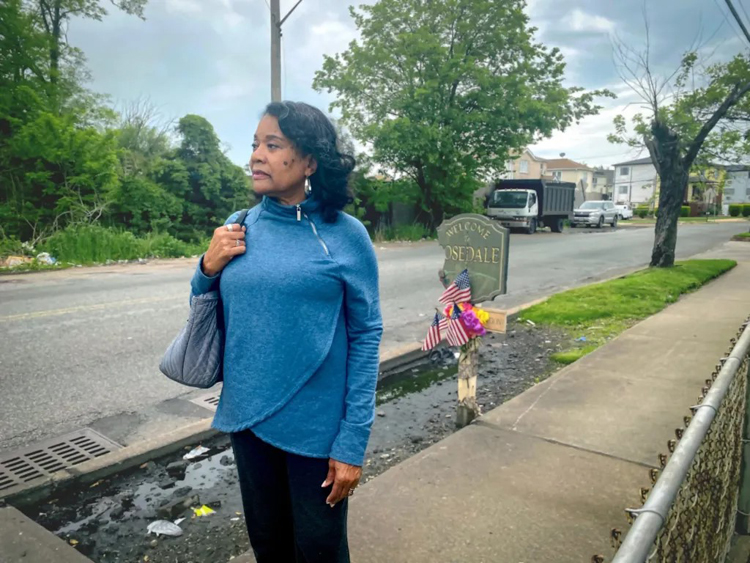
Normally, Estefani Nuñez parks the small yellow school bus she drives each day by the side of her home in the Rosedale neighborhood in Queens. On the day before she knows it’s going to rain, she parks her school bus a block away. When it does rain, she puts on her tall black boots to wade through water to make sure the children she has to pick up get to school on time.
Sometimes the boots aren’t enough and she is forced instead to wear garbage bags over them. Once in a while, when the water is too much, her own two kids become trapped at home because the flooding prevents them from leaving their house to make it to class.
The school bus driver lives on a block that runs perpendicular to Brookville Boulevard, at the dead end of her street; her home overlooks a marsh. From her front step, she can see fields of grass and a small body of water. Depending on the height of the tide, the water can swell and enter her property, soaking her yard and submerging her basement. On a day when both the tides are high and it’s rainy, flooding from both swamps her entire block.
Historic disinvestment in Black and Brown neighborhoods across the city has now left homeowners at the mercy of flooding that has been intensified by the climate crisis. Residents have pushed for solutions for decades, but many believe their concerns are ignored.
[…]
Sea level rise will exacerbate high tides, putting New York City on the path to get more tidal flooding due to climate change. By the 2040s, the city is expected to see 60–85 days of tidal floods, according to the New York State Climate Impacts Assessment.
As the tides rise, low-lying neighborhoods in southeast Queens, the Rockaways, and others near Jamaica Bay, some of which are at sea level, are at risk of even more flooding. Nuñez described the flooding on her block as an ocean.
[…]
Crystal Brown has lived in neighboring Brookville since 1987.
[…]
She travels on Snake Road a few times a month to go to the beach in the summers in the Rockaways or to go shopping. It’s also a shortcut to get to some parts of Nassau County. She’s always been concerned about the safety of the road and said her worries have only increased with climate change.
“God forbid there should be any kind of evacuation from Rockaway,” she said. “It would be a nightmare.”
Secretary of Transportation, Pete Buttigieg, has visited a predominantly Black Alabama community after neighborhood flooding
Comments Are Welcome
Note: We moderate submissions in order to create a space for meaningful dialogue, a space where museum visitors – adults and youth –– can exchange informed, thoughtful, and relevant comments that add value to our exhibits.
Racial slurs, personal attacks, obscenity, profanity, and SHOUTING do not meet the above standard. Such comments are posted in the exhibit Hateful Speech. Commercial promotions, impersonations, and incoherent comments likewise fail to meet our goals, so will not be posted. Submissions longer than 120 words will be shortened.
See our full Comments Policy here.