Pope Leo’s family tree shows ties to a prominent Creole family of color in Louisiana
Share
Explore Our Galleries









Breaking News!
Today's news and culture by Black and other reporters in the Black and mainstream media.
Ways to Support ABHM?
By Maya Eaglin, NBC
The pope’s great-great-grandmother Celeste Lemelle was a free woman of color from a Creole family that made its wealth from cattle ranching.
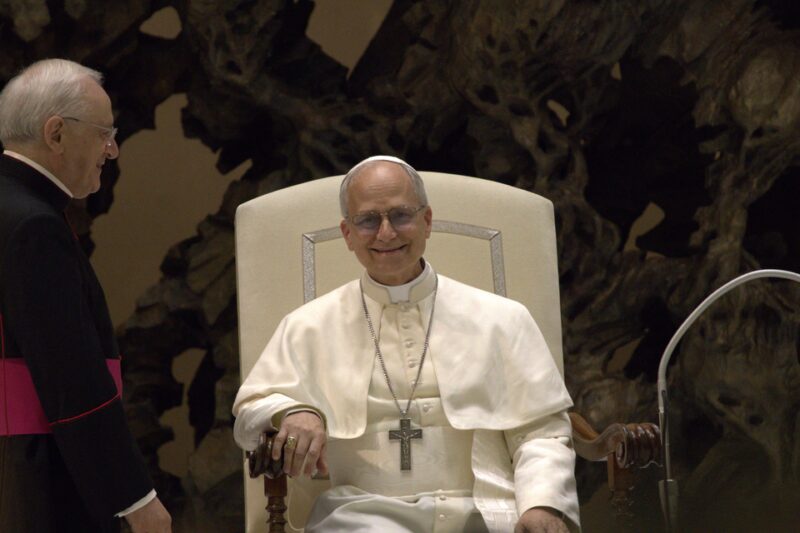
As the first Catholic pope from the United States, Pope Leo XIV has an ancestry that traces back to the Creole and free people of color from Louisiana, illustrating complex and interconnected issues of race and class in American history.
“His rise is not just a religious milestone, it’s a historical affirmation,” genealogist and former official Louisiana state archivist Alex DaPaul Lee said of the man previously known as Cardinal Robert Prevost.
When Lee first heard about the pope’s Creole roots from fellow genealogist Jamarlon Glenn, he responded, “There’s no way,” Lee said with a laugh. “But then I began going down a rabbit hole of research.”Lee, the founder of Alex Genealogy and Southwest Louisiana Genealogy Researchers, discovered troves of documents in his collection and gathered records from his network of genealogists that confirmed information about Pope Leo’s background. It also showed generations of Catholicism within Prevost’s family.
“It didn’t take long for me to realize that he was a Creole from the seventh ward of New Orleans, Louisiana, which was a prominent place for Louisiana Creoles,” he said.
NBC has more about the Creole community in Louisiana and the Pope’s connection to it.
Creole culture dates back to the first Africans who came to the Americas.
Comments Are Welcome
Note: We moderate submissions in order to create a space for meaningful dialogue, a space where museum visitors – adults and youth –– can exchange informed, thoughtful, and relevant comments that add value to our exhibits.
Racial slurs, personal attacks, obscenity, profanity, and SHOUTING do not meet the above standard. Such comments are posted in the exhibit Hateful Speech. Commercial promotions, impersonations, and incoherent comments likewise fail to meet our goals, so will not be posted. Submissions longer than 120 words will be shortened.
See our full Comments Policy here.