On This Date in History: Alex Haley Was Born
Share
Explore Our Galleries









Breaking News!
Today's news and culture by Black and other reporters in the Black and mainstream media.
Ways to Support ABHM?
From the African American Registry
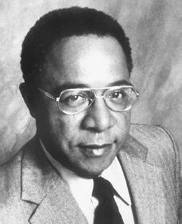
Alex Haley was born on this date in 1921. He was an African American author, whose books helped popularize the study of Black history and genealogy. Born in Ithaca, New York, Haley was educated at Alcorn Agricultural and Mechanical College and at Elizabeth City Teachers College. He served in the United States Coast Guard, where he worked as a journalist. After retiring, Haley moved to New York City to pursue a writing career. As a journalist Haley was impacting. In 1962 he interviewed trumpeter Miles Davis for Playboy magazine. Soon after, he interviewed Malcolm X, with whom he later collaborated to write The Autobiography of Malcolm X in 1965. The book had a strong influence on black nationalists. It also received praise from critics and was widely read in colleges and universities.
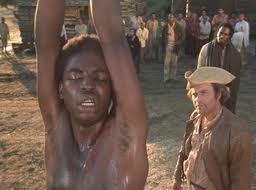
Haley then began to research and write what would become his best-known work, Roots: The Saga of an American Family. The book, a mixture of fact and fiction, chronicles Haley’s ancestral history and the methods he used to trace his lineage to a West African village. To write the work, Haley invented certain unknown details of his family history. The series of character portraits that he created caused many Americans to become interested in genealogy. Haley received special citations from the Pulitzer Prize and National Book Award committees for Roots.
Roots was translated into 26 languages and made into a television miniseries in 1977. An estimated 130 million Americans viewed at least one episode of the eight-part series. Alex Haley died in 1992.
Reference: The Encyclopedia of African-American Heritage by Susan Altman
For more Breaking News, click here.
Discover more Black history.
Comments Are Welcome
Note: We moderate submissions in order to create a space for meaningful dialogue, a space where museum visitors – adults and youth –– can exchange informed, thoughtful, and relevant comments that add value to our exhibits.
Racial slurs, personal attacks, obscenity, profanity, and SHOUTING do not meet the above standard. Such comments are posted in the exhibit Hateful Speech. Commercial promotions, impersonations, and incoherent comments likewise fail to meet our goals, so will not be posted. Submissions longer than 120 words will be shortened.
See our full Comments Policy here.