On the 4th of July, Remember John Lewis’ Warning About Jan. 6th.
Share
Explore Our Galleries









Breaking News!
Today's news and culture by Black and other reporters in the Black and mainstream media.
Ways to Support ABHM?
By Gevin Reynolds and Jeff Nussbaum, The Root
The late Congressman was prescient about the perils of extremist rhetoric.
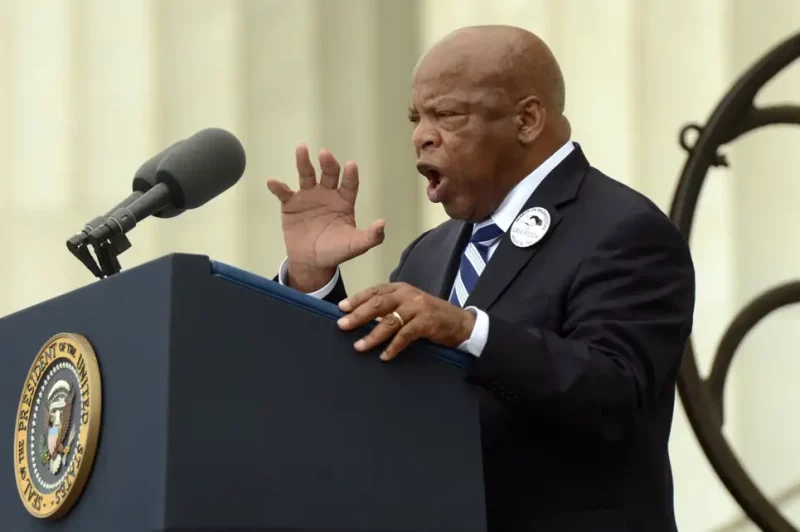
Moments before standing in front of the Lincoln Memorial at the 1963 March on Washington, John Lewis frantically re-worked his remarks in response to organizers’ fears that his words were too incendiary. Among the many changes Lewis made, he replaced the line,
We will march through the South, through the heart of Dixie, the way Sherman did. We shall pursue our own scorched earth policy and burn Jim Crow to the ground,
with,
We will march through the South, through the streets…But we will march with the spirit of love and with the spirit of dignity that we have shown here today.
Lewis recognized that words can act as both a precursor and a permission structure for action, and chose his carefully. Now, as the world digests what we learned about a former president’s actions from the January 6 hearings, we are reminded of just how destructive the results can be when our leaders fail to demonstrate the same wisdom and restraint Lewis did that day. That is why we—one of us a former intern for John Lewis, the other a former speechwriter for President Biden—think it’s time for the nation to pay a lot more attention to the words that have so often preceded violence in this country. Leaders must recognize the power of their words to sow hope or hate; to defend institutions or diminish them.
Keep reading to learn more about the impact of a president’s words.
For more examples of a president’s power, consult this list of the five presidents who made life worst for Black Americans.
Don’t forget to check out the ABHM breaking news archive every day of the year.
Comments Are Welcome
Note: We moderate submissions in order to create a space for meaningful dialogue, a space where museum visitors – adults and youth –– can exchange informed, thoughtful, and relevant comments that add value to our exhibits.
Racial slurs, personal attacks, obscenity, profanity, and SHOUTING do not meet the above standard. Such comments are posted in the exhibit Hateful Speech. Commercial promotions, impersonations, and incoherent comments likewise fail to meet our goals, so will not be posted. Submissions longer than 120 words will be shortened.
See our full Comments Policy here.