On Juneteenth, Freedom Came With Strings Attached
Share
Explore Our Galleries









Breaking News!
Today's news and culture by Black and other reporters in the Black and mainstream media.
Ways to Support ABHM?
By Charles M. Blow, The New York Times
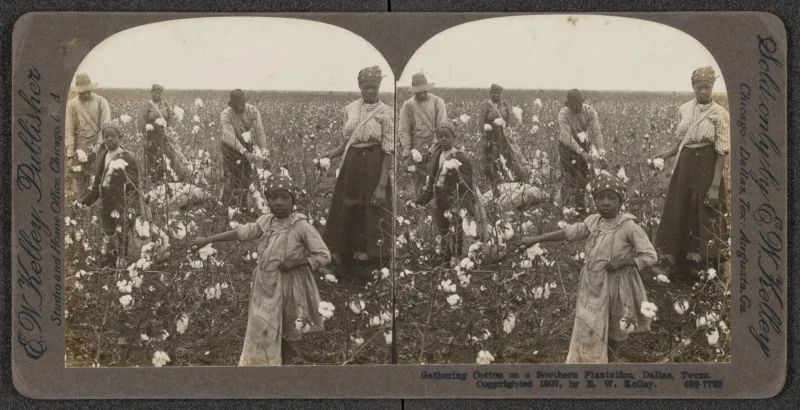
Last week at a Juneteenth concert on the South Lawn of the White House, Vice President Harris said that on June 19, 1865, after Union troops arrived in Galveston, Texas, “The enslaved people of Texas learned they were free.” On that day, she said, “they claimed their freedom.”
With those words, Harris, who stood alongside President Biden when he admirably signed the legislation that made Juneteenth a federal holiday, expressed a common oversimplification, one born of our tendency to conjugate history’s complexities: Although it’s a mark of progress to commemorate the end of American slavery, it’s imperative that we continue to underscore the myriad ways in which Black freedom was restricted long after that first Juneteenth.
To start, there is some debate over whether most of the estimated 250,000 enslaved people in Texas at the time didn’t know about the Emancipation Proclamation. As the famed Harvard professor Henry Louis Gates Jr. told me when we spoke recently, “I have never met a scholar who believes that’s true.”
But more important, emancipation was not true freedom — not in Texas and not in most of the American South, where the vast majority of Black people lived. It was quasi freedom. It was an ostensible freedom. It was freedom with more strings attached than a marionette.
Most Black people couldn’t claim their freedom on June 19, 1865, because their bodies (and their free will) were still being policed to nearly the same degree and with the same inveterate racism that Southern whites had aimed at them during slavery.
The laws governing the formerly enslaved “were very restrictive in terms of where they could go, what kind of jobs they could have, where they could live in certain communities,” said Daina Ramey Berry, the dean of humanities and fine arts at the University of California, Santa Barbara, and the author of “The Price for Their Pound of Flesh: The Value of the Enslaved, From Womb to Grave, in the Building of a Nation.”
As the Rediscovering Black History blog at the National Archives notes, “Most white Texans desired to keep Blacks as close to their formerly enslaved status as possible; therefore, they fiercely resisted any actions that would potentially elevate Blacks to a competitive social, political and economic status.” This was true throughout much of the former Confederacy.
And it was explicit. Upon arrival in Galveston, Union General Gordon Granger delivered General Order No. 3, which said “the connection heretofore existing” between “former masters and slaves” would become “that between employer and hired labor” and that “freedmen are advised to remain quietly at their present homes and work for wages.”
The order also had a curious stipulation: that freedmen would “not be supported in idleness.”
It would of course be completely understandable if, after being forced to work entirely for another’s gain for your whole life, the exercise of freedom that you might choose first would be a respite, and beyond that, you might decide who in your family should work outside the home and who in it. But that agency was largely denied to Black people.
Find more Breaking News here.
Explore our virtual exhibit gallery about the Reconstruction era here.
Comments Are Welcome
Note: We moderate submissions in order to create a space for meaningful dialogue, a space where museum visitors – adults and youth –– can exchange informed, thoughtful, and relevant comments that add value to our exhibits.
Racial slurs, personal attacks, obscenity, profanity, and SHOUTING do not meet the above standard. Such comments are posted in the exhibit Hateful Speech. Commercial promotions, impersonations, and incoherent comments likewise fail to meet our goals, so will not be posted. Submissions longer than 120 words will be shortened.
See our full Comments Policy here.