New Study Confirms Racial Bias in Criminal Sentencing
Share
Explore Our Galleries









Breaking News!
Today's news and culture by Black and other reporters in the Black and mainstream media.
Ways to Support ABHM?
University of Pennsylvania Law School
Taking a fresh approach to long-standing problem in the study of crime, a University of Pennsylvania Law School professor and colleagues at the University of Chicago and Harvard University have demonstrated conclusively for the first time that racial bias affects judicial sentencing decisions….
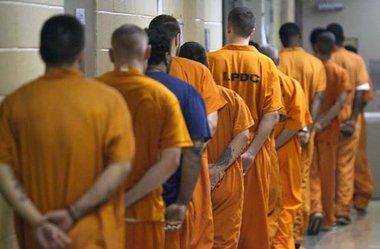
In their study, they take advantage of the fact that the criminal justice system randomly assigns cases to judges. “What that means,” Abrams says, “is that if you have a large enough sample of cases, on average across judges they’re going to get the same types of cases, meaning the same mix of race of the defendant, the same mix of crimes. Everything about the cases, assuming they’re randomly assigned, should be the same on average for each judge, including the variables we can’t observe.”
Working with a large data set of felony cases from Cook County, IL, the investigators use a statistical technique called a Monte Carlo simulation to show that judges take race into account in their sentencing decisions.
They look at what they call the “racial gap” in sentencing – the difference between sentences for black defendants and white defendants – and find that it varies across judges, showing that race is affecting sentencing decisions. “We find evidence of significant inter-judge disparity in the racial gap in incarceration rates, providing support for the model where at least some judges treat defendants differently based on their race,” Abrams and his co-authors note in the study. “The magnitude of this effect is substantial. The gap in incarceration rates between White and African-American defendants increases by 18 percentage points (compared to a mean incarceration rate of 51% for African-Americans and 38% for Whites) when moving from the 10th to 90th percentile judge in the racial gap distribution.”
Read more about the study here.
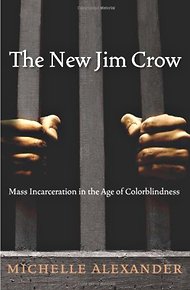
Read a review of Michelle Alexander’s book here.
Racial bias is a cornerstone of imprisonment.
Comments Are Welcome
Note: We moderate submissions in order to create a space for meaningful dialogue, a space where museum visitors – adults and youth –– can exchange informed, thoughtful, and relevant comments that add value to our exhibits.
Racial slurs, personal attacks, obscenity, profanity, and SHOUTING do not meet the above standard. Such comments are posted in the exhibit Hateful Speech. Commercial promotions, impersonations, and incoherent comments likewise fail to meet our goals, so will not be posted. Submissions longer than 120 words will be shortened.
See our full Comments Policy here.