New Civil War research sheds light on Columbia Pike military camp for Black troops
Share
Explore Our Galleries









Breaking News!
Today's news and culture by Black and other reporters in the Black and mainstream media.
Ways to Support ABHM?
By Scott McCaffrey, ArlNow
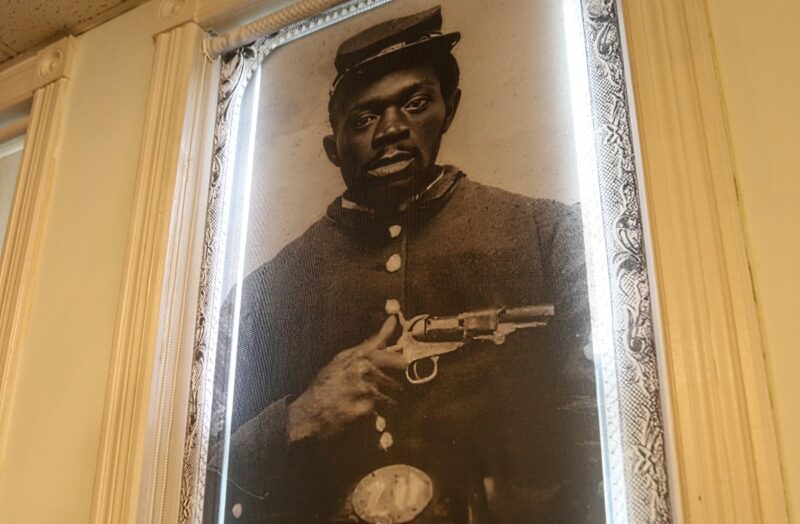
New research is shedding light on a 40-acre military camp for Black soldiers that fanned out from the southeast corner of Columbia Pike and S. Courthouse Road during the Civil War.
Camp Casey served as a key recruiting and training ground for the military regiments that would become known as the U.S. Colored Troops. Some of the soldiers had been enslaved, while others were either born free or emancipated.
All put on the uniform of their country and fought throughout the Civil War up to its final battles, researcher Michael Schaffner said at a Sunday presentation at the Arlington History Museum.
“I thought I knew a lot about the Civil War growing up here,” Schaffner said.
But Camp Casey, he said, was not a story he had come upon before beginning several years of research combing through military and government records to paint a picture of the training facility.
The camp was a military base where perhaps as many as 6,000 men spent their first days in the Union Army. Like many local military encampments, however, it disappeared almost as soon as the conflict ended in 1865.
Until very recently, even the location of the camp had been shrouded in mystery. Schaffner credits Jessica Kaplan, who heads the historical society’s Memorializing the Enslaved in Arlington effort, with helping to pin it down.
Learn about Fort Casey’s history.
You don’t have to leave your house to learn Black history.
Comments Are Welcome
Note: We moderate submissions in order to create a space for meaningful dialogue, a space where museum visitors – adults and youth –– can exchange informed, thoughtful, and relevant comments that add value to our exhibits.
Racial slurs, personal attacks, obscenity, profanity, and SHOUTING do not meet the above standard. Such comments are posted in the exhibit Hateful Speech. Commercial promotions, impersonations, and incoherent comments likewise fail to meet our goals, so will not be posted. Submissions longer than 120 words will be shortened.
See our full Comments Policy here.