Mostly Black Cities, Mostly White City Halls
Share
Explore Our Galleries









Breaking News!
Today's news and culture by Black and other reporters in the Black and mainstream media.
Ways to Support ABHM?
By RICHARD FAUSSET, New York Times
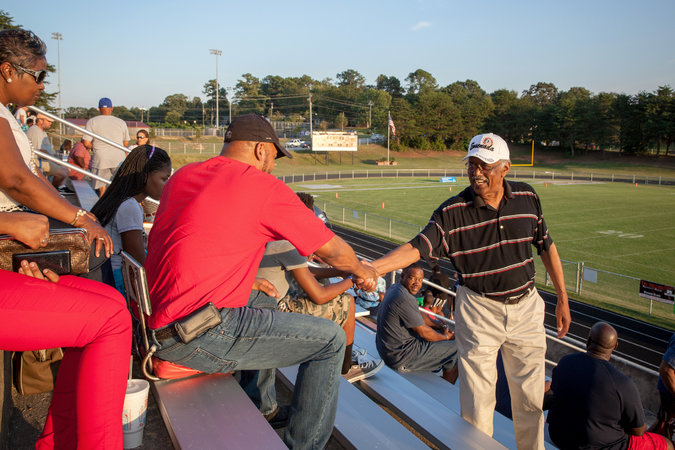
CONYERS, Ga. — Since moving to this small city on the eastern flank of Atlanta’s suburban sprawl, Lorna Francis, a hairdresser and a single mother, has found a handsome brick house to rent on a well-groomed cul-de-sac. She has found a good public school for her teenage daughter.
Something Ms. Francis, who is black, has not found is time to register and vote. She was unaware that the most recent mayoral election was held last November.
“Life’s been busy — I’ve been trying to make that money,” Ms. Francis said one morning this month from her two-car garage, where she was micromanaging a particularly complex hairdo for a regular client. “And honestly, I only vote in major elections.”
That kind of disengagement is one of the many reasons that only one of the six elected positions in this municipality of 15,000 is held by an African-American, even as a wave of new black residents has radiated out from nearby Atlanta, creating a black majority here for the first time in the city’s 160-year history.
Disparities between the percentage of black residents and the number of black elected officials are facts of life in scores of American cities, particularly in the South. The unrest that followed the shooting death of 18-year-old Michael Brown in Ferguson, Mo., has emphasized how much local elections can matter, and prompted a push there for increased black voter participation.
The disparities result from many factors: voter apathy, especially in low-visibility local elections; the civic disconnect of a transient population; the low financial rewards and long hours demanded of local officeholders; and voting systems, including odd-year elections, that are often structured in a way that discourages broad interest in local races.
But Ferguson has become a vivid example of the way a history of political disengagement and underrepresentation can finally turn toxic.
Read full article here.
Read more Breaking News here.
Comments Are Welcome
Note: We moderate submissions in order to create a space for meaningful dialogue, a space where museum visitors – adults and youth –– can exchange informed, thoughtful, and relevant comments that add value to our exhibits.
Racial slurs, personal attacks, obscenity, profanity, and SHOUTING do not meet the above standard. Such comments are posted in the exhibit Hateful Speech. Commercial promotions, impersonations, and incoherent comments likewise fail to meet our goals, so will not be posted. Submissions longer than 120 words will be shortened.
See our full Comments Policy here.