More DNA sought from remains of possible massacre victims
Share
Explore Our Galleries









Breaking News!
Today's news and culture by Black and other reporters in the Black and mainstream media.
Ways to Support ABHM?
By Associated Press
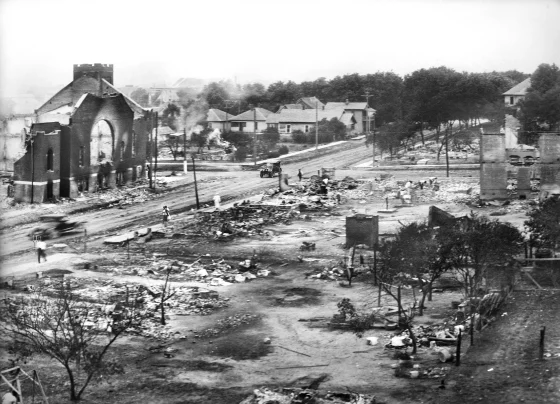
Scientists seeking to identify more victims of the 1921 Tulsa Race Massacre are planning to extract more DNA from recently reburied remains and test more areas as potential sites to search for additional bodies.
Remains found and exhumed from Oaklawn Cemetery last year and temporarily reburied there will be exhumed again for additional DNA samples in an effort to identify them, according to a report issued Tuesday to the 1921 Graves Investigation Public Oversight Committee.
The remains will then reburied in the same location, according to the report by state archaeologist Kary Stackelbeck and forensic anthropologist Phoebe Stubblefield.
Additional graves in the cemetery also will be excavated and those in simple, wooden coffins — said to be the type massacre victims were buried in — will be exhumed, the report said.
“We are already making preparations,” Stubblefield said. “We don’t have a date, but we hope to be there this fall.”
Read about the efforts to identify the victims.
We’ve previously posted about the Tulsa Race Massacre.
More breaking news here.
Comments Are Welcome
Note: We moderate submissions in order to create a space for meaningful dialogue, a space where museum visitors – adults and youth –– can exchange informed, thoughtful, and relevant comments that add value to our exhibits.
Racial slurs, personal attacks, obscenity, profanity, and SHOUTING do not meet the above standard. Such comments are posted in the exhibit Hateful Speech. Commercial promotions, impersonations, and incoherent comments likewise fail to meet our goals, so will not be posted. Submissions longer than 120 words will be shortened.
See our full Comments Policy here.