More Black and Latina women are leading unions — and transforming how they work
Share
Explore Our Galleries









Breaking News!
Today's news and culture by Black and other reporters in the Black and mainstream media.
Ways to Support ABHM?
By Claire Savage, Associated Press
Black and Latina women are landing top positions at some of the biggest unions in the U.S, and that has translated into wins at the bargaining table that focus on family-friendly benefits like parental leave, health care coverage and protections against sexual harassment.
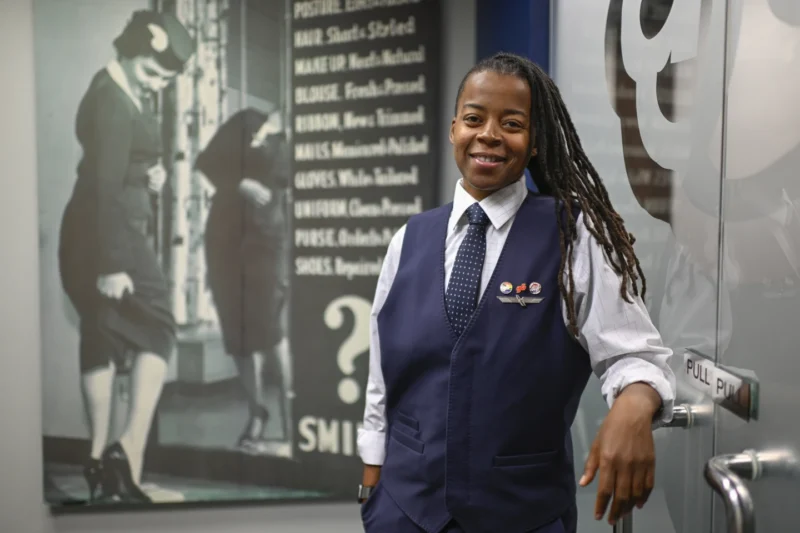
Women make up roughly half of U.S. labor union membership, but representation in top level union leadership positions has lagged, even in female-dominated industries and particularly for women of color.
But Black and Latina women are starting to gain ground, landing top positions at some of the biggest unions in the U.S. That has translated into wins at the bargaining table that focus more attention on family-friendly benefits like parental leave and health care coverage, as well as protections against sexual harassment.
Often when people think about unions, “they think of a white guy in a hard hat. But in fact, studies show that about two-thirds of working people who are covered by a union contract are women and/or people of color,” said Georgetown University labor historian Lane Windham.
Indeed, hospitality union UNITE HERE’s membership is majority women and people of color. And last month, more than 12,000 of them across six states went on strike to push for wage increases, fair workloads and more affordable health care under the leadership of Gwen Mills, who in June became the first woman to be elected union president in its 130-year history.
Data from the U.S. Department of Labor shows that Black and Latina women experience a particularly wide gender pay gap. They also face intersectional headwinds of both racism and sexism in their careers, making them even more attuned to inequities in the workplace and motivating them to increasingly step up the fight as union leaders.
[…]
Data from the U.S. Department of Labor shows that Black and Latina women experience a particularly wide gender pay gap. They also face intersectional headwinds of both racism and sexism in their careers, making them even more attuned to inequities in the workplace and motivating them to increasingly step up the fight as union leaders.
Continue reading the article here.
Check out this exhibit on June Jordan exploring the intersection of race and gender through poetry.
Comments Are Welcome
Note: We moderate submissions in order to create a space for meaningful dialogue, a space where museum visitors – adults and youth –– can exchange informed, thoughtful, and relevant comments that add value to our exhibits.
Racial slurs, personal attacks, obscenity, profanity, and SHOUTING do not meet the above standard. Such comments are posted in the exhibit Hateful Speech. Commercial promotions, impersonations, and incoherent comments likewise fail to meet our goals, so will not be posted. Submissions longer than 120 words will be shortened.
See our full Comments Policy here.