‘MLK/FBI’ Review: The FBI’s Clownish Surveillance Of A Civil Rights Icon Is More Relevant Than Ever
Share
Explore Our Galleries









Breaking News!
Today's news and culture by Black and other reporters in the Black and mainstream media.
Ways to Support ABHM?
This film was screened as a part of the 2020 Toronto International Film Festival.
By Trey Mangum, Shadow and Act
With the events of 2020, there is no better time to look at the past in order to forge a clear path forward. Documentarian and frequent Spike Lee editor Sam Pollard, known for works like Sammy Davis, Jr.: I’ve Gotta Be Me and Maynard, brings a Martin Luther King Jr. narrative as we’ve haven’t really seen on-screen before in MLK/FBI. Using archival footage and interviews with those close to King and the situation, the documentary film shows how FBI founder J. Edgar Hoover spent years targeting King and the Civil Rights Movement.
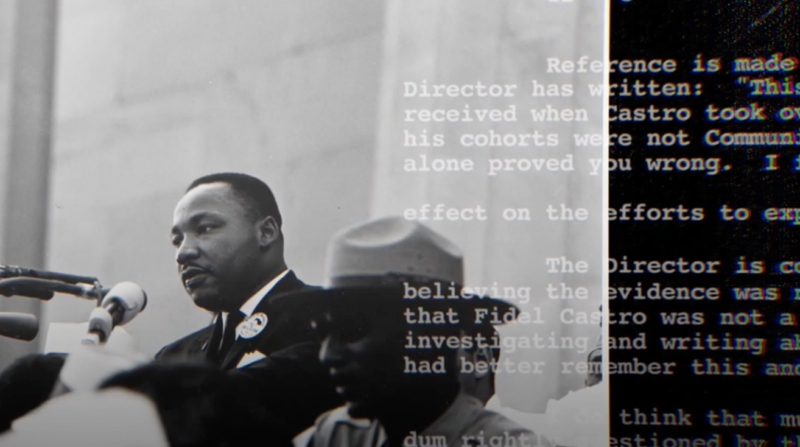
The general premise of MLK/FBI is not new and we don’t learn any unknown facts about King. But what we do get is the presentation and confirmation of everything we’ve known or speculated about the surveillance of King and why. For years, there’s been knowledge that the FBI, under Hoover, surveilled Black leaders and Black groups. As history would make you believe, King was lauded by all, which is something that we have to debunk almost every week by “allies” who use King’s quotes out of context in order to perpetuate Black pacifism and non-violent protests. Year after year, King continues to be depicted as something that he wasn’t. MLK/FBI takes a hammer and shatters this theory in full, as the FBI branded him as the most dangerous man in America. How is the man that the government was so afraid of and made white America so uncomfortable somehow now the principal voice against unruly protests? That’s because he wasn’t that person.
For the most part, history portrays Hoover as someone who acted on his power and made it his mission to attempt to destroy King. This may be true, but what is not true is that the U.S. government was not complicit in all of this. As the documentary depicts, the government clearly knew what was going on and had no issue with it. One major point the MLK/FBI drives home is the complicity that the presidential administrations — both Kennedy and Johnson — had in the FBI’s surveillance of King. But let anyone tell it, they were King’s allies. That’s not entirely true.
MLK/FBI had its world premiere at the Telluride Film Festival and subsequently screened at the Toronto International Film Festival. It was acquired by IFC Films and will likely be released in the coming months.
Read the full article here.
To learn more seldom-told stories about the Civil Rights Movement click here.
More Breaking News here.
Comments Are Welcome
Note: We moderate submissions in order to create a space for meaningful dialogue, a space where museum visitors – adults and youth –– can exchange informed, thoughtful, and relevant comments that add value to our exhibits.
Racial slurs, personal attacks, obscenity, profanity, and SHOUTING do not meet the above standard. Such comments are posted in the exhibit Hateful Speech. Commercial promotions, impersonations, and incoherent comments likewise fail to meet our goals, so will not be posted. Submissions longer than 120 words will be shortened.
See our full Comments Policy here.