Mass Grave Recalls the Ugly Past of a City Where ‘Life Is Sweeter’
Share
Explore Our Galleries









Breaking News!
Today's news and culture by Black and other reporters in the Black and mainstream media.
Ways to Support ABHM?
By Priya Krishna, New York Times
The Houston suburb Sugar Land got its name from a business reliant on the forced labor of convicts. But efforts to memorialize those people have stalled.
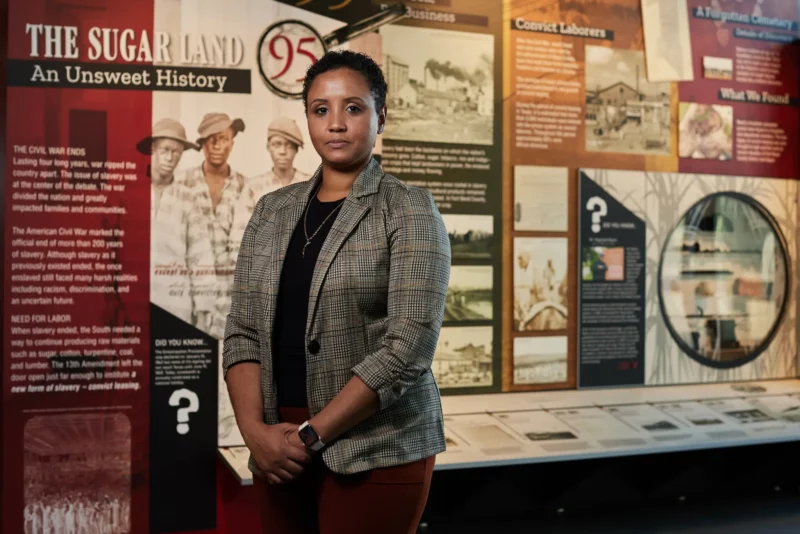
In Sugar Land, Texas, there’s a refrain you may hear from residents — an unofficial city motto of sorts: Life is sweeter here.
By many measures, it is. This Houston suburb is affluent, with a median household income nearly 70 percent higher than the nation’s. One of the world’s largest oil companies, Schlumberger, has a sprawling campus here. The crown jewel of its current development boom is the Imperial Char House, the sugar refinery that gave the town its name and will soon become the centerpiece of a complex including luxury apartments, museums and a distillery.
The city’s lure is so strong that it was chosen to host the inaugural Honeyland festival, a two-day celebration of Black food and music to be held this weekend, with a long lineup of celebrities that includes Mary J. Blige, Miguel and the chef Marcus Samuelsson.
But beneath Sugar Land’s success lies a disturbing piece of Black history. For decades after slavery was abolished in the United States, a prison farm that grew sugar for the Imperial refinery relied on the forced labor of prison inmates, most of them Black men, including many who had been locked up for conduct as minor as loitering or not having a job. The practice, known as convict leasing and used throughout the South, created such brutal conditions that many Sugar Land inmates died within two years after being incarcerated.
In 2018, the remains of 95 African Americans — 94 men and one believed to have been a woman — were found during the construction of a technical school in Sugar Land. The discovery drew national news coverage and calls for a proper memorial, research into the convicts’ lives and broader education about convict leasing.
The New York Times has more.
Unfortunately, slavery and racism have contributed to multiple mass graves.
More breaking news here.
Comments Are Welcome
Note: We moderate submissions in order to create a space for meaningful dialogue, a space where museum visitors – adults and youth –– can exchange informed, thoughtful, and relevant comments that add value to our exhibits.
Racial slurs, personal attacks, obscenity, profanity, and SHOUTING do not meet the above standard. Such comments are posted in the exhibit Hateful Speech. Commercial promotions, impersonations, and incoherent comments likewise fail to meet our goals, so will not be posted. Submissions longer than 120 words will be shortened.
See our full Comments Policy here.