Looks Like the EPA’s Fine With Black Folks Breathing Dirtier Air And everyone else, too.
Share
Explore Our Galleries









Breaking News!
Today's news and culture by Black and other reporters in the Black and mainstream media.
Ways to Support ABHM?
By Willy Blackmore, Word in Black
In March, Environmental Protection Agency administrator Lee Zeldin announced sweeping deregulation efforts by saying, “We are driving a dagger straight into the heart of the climate change religion.”
Among the 31 “historic” actions that the EPA began at the time was the “reconsideration” of what’s known as the endangerment finding — the 2009 declaration made by the Obama EPA that greenhouse gases present a risk to human health and can thereby be regulated under the Clean Air Act. The finding is, in many ways, the heart of federal climate efforts: It’s the foundation for all federal regulations that limit carbon emissions. Now, the Trump EPA appears to be on the verge of overturning it, as The New York Times and other news outlets have reported.
RELATED: When Science Is Silenced, We All Breathe the Consequences
Having no basis for regulating carbon emissions would have devastating consequences not just for every American but for the entire world, as the United States remains the largest emitter of carbon globally. But as is so often the case when it comes to climate change and other environmental issues, Black people will likely face the worst and most immediate consequences if greenhouse gas emissions are no longer regulated — because the already dirtier air that Black America breathes will get that much worse.
The Plan: Roll Back Tailpipe Emissions Standards
There’s no need to guess as what the knock-on effects of overturning the finding might be, because the EPA’s draft plan, as the Times has reported, makes the next steps very clear: with the endangerment finding gone, the Trump EPA plans to rollback all tailpipe emissions from every class of vehicle, from passenger cars to semi trucks.
“The E.P.A. intends to argue that imposing climate regulations on automakers poses the real harm to human health because it would lead to higher prices and reduced consumer choice, according to the two people familiar with the administration’s plan,” according to the Times.
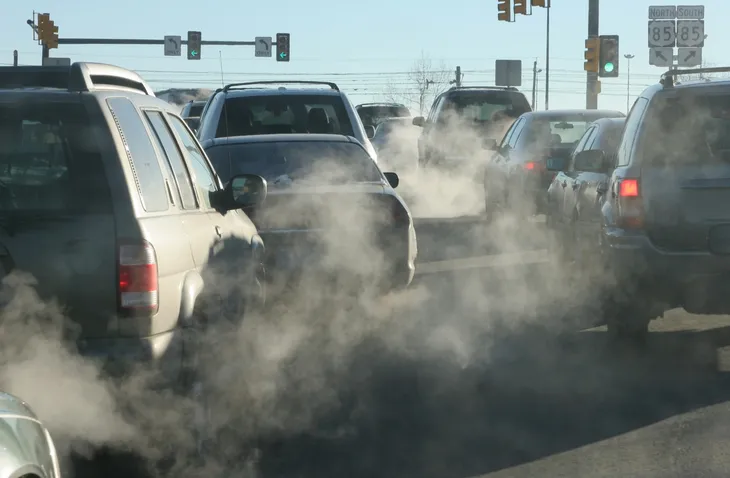
The stricter tailpipe emission standards announced by the Biden Administration last year are a prime example of how limiting greenhouse gas emissions in an effort to address the climate crisis has an immediate effect on local air quality, as well. The rule introduced progressive reductions of both carbon and nitrogen oxides emissions from all vehicle classes, which would significantly increase the number of electric vehicles on American roads, as well as significantly reduce emissions from new vehicles that continue to run on fossil fuels.
Black Communities Already Breathe Dirtier Air
Nitrogen oxides contribute to smog, which presents a host of public health issues that are felt most strongly in communities that are disproportionately exposed – which tend to be Black and Brown neighborhoods.
Cutting greenhouse gas emissions alone also reduces other toxic emissions from vehicles, like fine particulate matter pollution, which exacerbates asthma and other respiratory diseases, which are also disproportionately prevalent in Black communities.
Read more on why EPA is fine with black folks breathing dirtier air
Check out our galleries and exhibits to see more of what we are curating
Check out our Breaking News section for more Black News.
Comments Are Welcome
Note: We moderate submissions in order to create a space for meaningful dialogue, a space where museum visitors – adults and youth –– can exchange informed, thoughtful, and relevant comments that add value to our exhibits.
Racial slurs, personal attacks, obscenity, profanity, and SHOUTING do not meet the above standard. Such comments are posted in the exhibit Hateful Speech. Commercial promotions, impersonations, and incoherent comments likewise fail to meet our goals, so will not be posted. Submissions longer than 120 words will be shortened.
See our full Comments Policy here.