Legacy of Slavery expands work with oldest genealogical nonprofit in U.S.
Share
Explore Our Galleries









Breaking News!
Today's news and culture by Black and other reporters in the Black and mainstream media.
Ways to Support ABHM?
By Andrea Perera, Harvard Correspondent
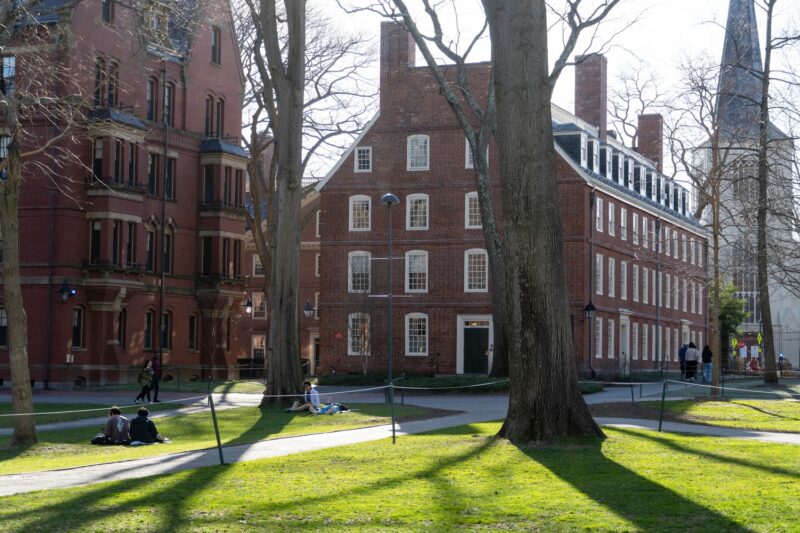
Partnership laying groundwork for University to engage with direct descendants
Harvard has expanded its partnership with American Ancestors, with the nation’s oldest genealogical nonprofit leading efforts to advance descendant research in the Harvard & the Legacy of Slavery Initiative. The University began the collaboration in 2022 upon the creation of the initiative, which was established to implement the recommendations of the Presidential Committee on Harvard & the Legacy of Slavery.
“American Ancestors is recognized globally for the thoughtfulness and rigor of its research efforts,” said Harvard University President Alan M. Garber in a Jan. 23 announcement. “We look forward to the expertise and skill with which [they] will continue to build on the foundation we laid in 2022.”
The initiative established the Harvard Slavery Remembrance Program, which includes the work being led by American Ancestors to research the individuals enslaved by Harvard leaders, faculty, and staff, and their descendants.
“Slavery was such a dark moment in our nation’s history, and through this research, we have an opportunity to bring light and greater understanding of its legacy for today,” said Evelynn Hammonds, a member of the initiative’s advisory council and the Barbara Gutmann Rosenkrantz Professor of the History of Science and professor of African and African American Studies, and professor in the Department of Social and Behavioral Sciences, T.H. Chan School of Public Health.
The Slavery Remembrance Program is one of several priorities the initiative is pursuing as the University moves into the next phase of the work to implement the Presidential Committee recommendations.
Harvard previously laid off internal staff working on the project.
Comments Are Welcome
Note: We moderate submissions in order to create a space for meaningful dialogue, a space where museum visitors – adults and youth –– can exchange informed, thoughtful, and relevant comments that add value to our exhibits.
Racial slurs, personal attacks, obscenity, profanity, and SHOUTING do not meet the above standard. Such comments are posted in the exhibit Hateful Speech. Commercial promotions, impersonations, and incoherent comments likewise fail to meet our goals, so will not be posted. Submissions longer than 120 words will be shortened.
See our full Comments Policy here.