Labor Day Black History: Honoring A.Philip Randolph And Black Labor Unions
Share
Explore Our Galleries









Breaking News!
Today's news and culture by Black and other reporters in the Black and mainstream media.
Ways to Support ABHM?
By Cherranda Smith, Black Information Network
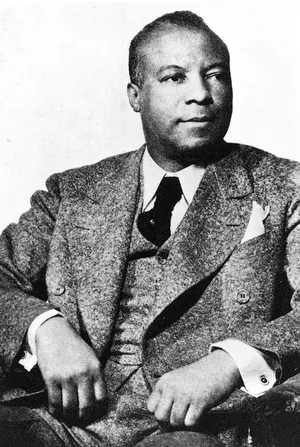
The first Monday of September marks the end of summer every year in the US. It’s also the day workers’ rights advocates pushed to formally recognize the achievement and contributions of American laborers.
The holiday was first celebrated in the early 1880s by individual states before getting its national holiday title in 1894. At the time, Black people in the US were just years separated from slavery, in the throes of the Reconstruction Era, and battling ongoing racial injustice in every aspect of life, especially the labor market. After being enslaved for generations, Black people fought –– and continue the fight –– to earn equal pay, workers’ rights, and more.
One Black figure leading the way was Asa Philip Randolph who, in 1925, began a decade-long crusade leading the Brotherhood of Sleeping Car Porters (BSCP), one of the nation’s first Black labor unions. The organization brought labor union ideals to thousands of Black households, and in 1935, became the first Black-led labor organization certified by the American Federation of Labor as an exclusive collective bargaining agent.
Learn more about the BSCP and Randolph’s connection to Martin Luther King Jr.
Check out this video about his work.
Civil rights activists and leaders took on more than labor issues.
Our breaking news archive covers more stories like this.
Comments Are Welcome
Note: We moderate submissions in order to create a space for meaningful dialogue, a space where museum visitors – adults and youth –– can exchange informed, thoughtful, and relevant comments that add value to our exhibits.
Racial slurs, personal attacks, obscenity, profanity, and SHOUTING do not meet the above standard. Such comments are posted in the exhibit Hateful Speech. Commercial promotions, impersonations, and incoherent comments likewise fail to meet our goals, so will not be posted. Submissions longer than 120 words will be shortened.
See our full Comments Policy here.