Justice Jackson working on a memoir, titled ‘Lovely One’
Share
Explore Our Galleries









Breaking News!
Today's news and culture by Black and other reporters in the Black and mainstream media.
Ways to Support ABHM?
By Hillel Italie, Associated Press
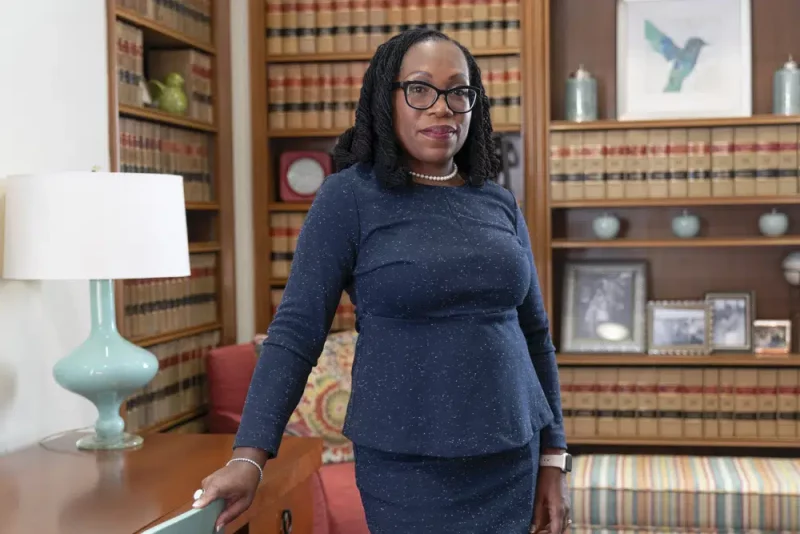
NEW YORK (AP) — Supreme Court Justice Ketanji Brown Jackson is working on a memoir. Jackson, the first Black woman appointed to the court, is calling the book “Lovely One.”
“Mine has been an unlikely journey,” Jackson said in a statement released Thursday by Random House.
“But the path was paved by courageous women and men in whose footsteps I placed my own, road warriors like my own parents, and also luminaries in the law, whose brilliance and fortitude lit my way. This memoir marries the public record of my life with what is less known. It will be a transparent accounting of what it takes to rise through the ranks of the legal profession, especially as a woman of color with an unusual name and as a mother and a wife striving to reconcile the demands of a high-profile career with the private needs of my loved ones.”
No release date has been set for “Lovely One.” Jackson, 52, was born Ketanji Onyika Brown. The book’s title comes from the English translation of Ketanji Onyika, the name suggested by an aunt who at the time was a Peace Corps worker in West Africa.
Jackson’s position was made possible by trailblazers and activists and her memoir will likely detail some experiences that leave Black Americans wondering if they’re really free.
Our breaking news page has more stories about Black culture.
Comments Are Welcome
Note: We moderate submissions in order to create a space for meaningful dialogue, a space where museum visitors – adults and youth –– can exchange informed, thoughtful, and relevant comments that add value to our exhibits.
Racial slurs, personal attacks, obscenity, profanity, and SHOUTING do not meet the above standard. Such comments are posted in the exhibit Hateful Speech. Commercial promotions, impersonations, and incoherent comments likewise fail to meet our goals, so will not be posted. Submissions longer than 120 words will be shortened.
See our full Comments Policy here.