Justice in the Algorithm

Share

Explore Our Galleries

An NAACP flyer campaigning for the Dyer Anti-Lynching Bill, which passed the U.S. House of Representatives in 1922, but was filibustered to defeat in the Senate. Dyer, the NAACP, and freedom fighters around the country, like Flossie Baily, struggled for years to get the Dyer and other anti-lynching bills passed, to no avail. Today there is still no U.S. law specifically against lynching. In 2005, eighty of the 100 U.S. Senators voted for a resolution to apologize to victims' families and the country for their failure to outlaw lynching. Courtesy of the National Association for the Advancement of Colored People (NAACP).
Some Exhibits to Come – One Hundred Years of Jim Crow
Mammy Statue JC Museum Ferris
Bibliography – One Hundred Years Of Jim Crow
Claude, age 23, just months before his 1930 murder. Courtesy of Faith Deeter.
Freedom’s Heroes During Jim Crow: Flossie Bailey and the Deeters
Souvenir Portrait of the Lynching of Abram Smith and Thomas Shipp, August 7, 1930, by studio photographer Lawrence Beitler. Courtesy of the Indiana Hisorical Society.
An Iconic Lynching in the North
Lynching Quilt
Claxton Dekle – Prosperous Farmer, Husband & Father of Two
Ancient manuscripts about mathematics and astronomy from Timbuktu, Mali
Some Exhibits to Come – African Peoples Before Captivity
Shackles for Adults & Children from the Henrietta Marie
Some Exhibits to Come – The Middle Passage
Slaveship Stowage Plan
What I Saw Aboard a Slave Ship in 1829
Arno Michaels
Life After Hate: A Former White Power Leader Redeems Himself

Breaking News!

Today's news and culture by Black and other reporters in the Black and mainstream media.

Ways to Support ABHM?

Mustafa Ali, Word in Black
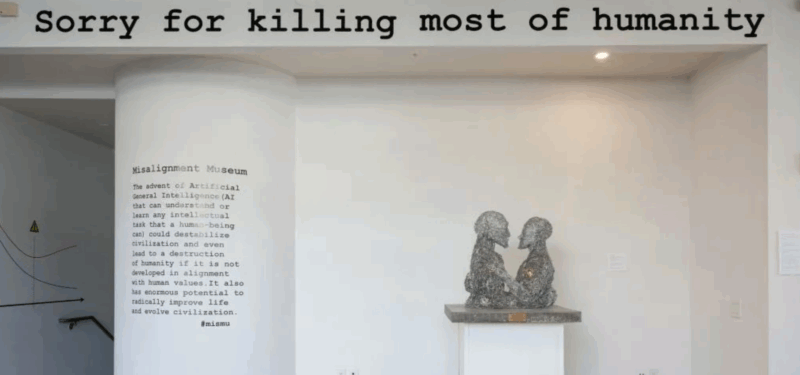
An exhibition titled the Misalignment Museum opened to the public in San Francisco on March 9th, 2023, featuring funny or disturbing AI art works to help visitors think about the potential dangers of artificial intelligence. (Photo by AMY OSBORNE/AFP via Getty Images)

[…]

AI doesn’t have to be evil. It’s not inherently racist or sexist or ableist. But it will become those things if we don’t train it differently — because it learns from us. And if we don’t teach it to see the humanity in the most marginalized, it will reinforce the hierarchies that profit from their invisibility.

Every decision we make now—about facial recognition, about predictive policing, about employment screening, about who gets credit and who gets watched—etches itself into the code of tomorrow. We are building a digital Constitution, line by line, and if equity isn’t the preamble, oppression will be the default.

Read the full article here – Justice in the Algorithm

For more topics, take a look at ABHM’s galleries

More Breaking News here

Comments Are Welcome

Note: We moderate submissions in order to create a space for meaningful dialogue, a space where museum visitors – adults and youth –– can exchange informed, thoughtful, and relevant comments that add value to our exhibits.

Racial slurs, personal attacks, obscenity, profanity, and SHOUTING do not meet the above standard. Such comments are posted in the exhibit Hateful Speech. Commercial promotions, impersonations, and incoherent comments likewise fail to meet our goals, so will not be posted. Submissions longer than 120 words will be shortened.

See our full Comments Policy here.

Leave a Comment







