Juneteenth National Freedom Day
Share
Explore Our Galleries









Breaking News!
Today's news and culture by Black and other reporters in the Black and mainstream media.
Ways to Support ABHM?
From the African American Registry
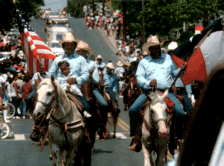
This date marks the Juneteenth National Freedom Day. Celebrated on June 19, Juneteenth is the oldest nationally celebrated commemoration of the ending of slavery in the United States. It is the name given to Emancipation Day (or Freedam Day)_by African-Americans in in Galveston, Texas, in 1865, when Union Major General Gordon Granger arrived in town and read General Order #3 to the people of Galveston. It stated, “The people of Texas are informed that, in accordance with a proclamation from the Executive of the United States, all slaves are free. This involves an absolute equality of personal rights and rights of property between former masters and slaves, and the connection heretofore existing between them becomes that between employer and hired labor. The freedmen are advised to remain quietly at their present homes and work for wages. They are informed that they will not be allowed to collect at military posts and that they will not be supported in idleness either there or elsewhere.”
the observance of June nineteenth as the African American Emancipation Day has spread across the United States and beyond and in many states is an official holiday. Large celebrations began in 1866 and continue to the present. African-Americans treat this day like the Fourth of July. In the early days, the celebration included a prayer service, speakers with inspirational messages, reading of the Emancipation Proclamation, stories from former slaves, food, red soda water, games, and rodeo dances. The tradition spread as African-American Texans migrated. Celebration of Juneteenth declined during World War II but revived in 1950, and fell away again during the 1960s as attention focused on expansion of freedom for African-Americans.
In 1976, after a 25-year hiatus, House Bill Number 1016, passed in the 66th legislature, declared June 19 “Emancipation Day in Texas,” a legal state holiday effective January 1, 1980 and the celebration of Juneteenth continues.
Emancipation ended three centuries of slavery.
Comments Are Welcome
Note: We moderate submissions in order to create a space for meaningful dialogue, a space where museum visitors – adults and youth –– can exchange informed, thoughtful, and relevant comments that add value to our exhibits.
Racial slurs, personal attacks, obscenity, profanity, and SHOUTING do not meet the above standard. Such comments are posted in the exhibit Hateful Speech. Commercial promotions, impersonations, and incoherent comments likewise fail to meet our goals, so will not be posted. Submissions longer than 120 words will be shortened.
See our full Comments Policy here.