It’s 30 years since apartheid ended. South Africa’s celebrations are set against growing discontent
Share
Explore Our Galleries









Breaking News!
Today's news and culture by Black and other reporters in the Black and mainstream media.
Ways to Support ABHM?
By Nqobile Ntshangase and Gerald Imray, Associated Press
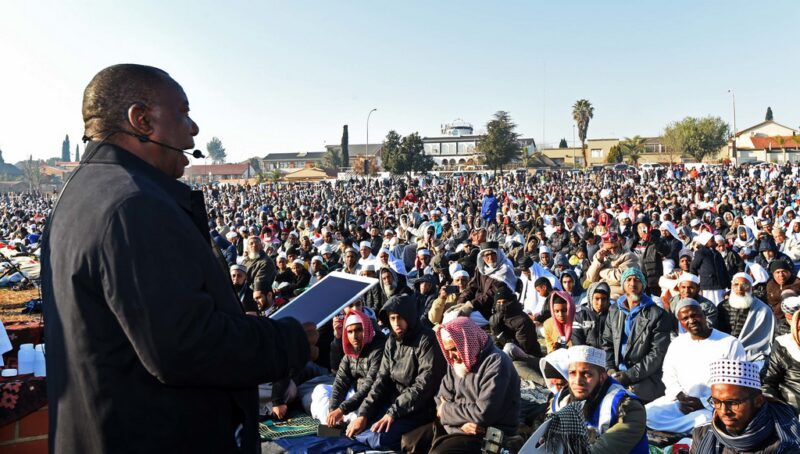

South Africa marked 30 years since the end of apartheid and the birth of its democracy with a ceremony in the capital Saturday that included a 21-gun salute and the waving of the nation’s multicolored flag.
But any sense of celebration on the momentous anniversary was set against a growing discontent with the current government.
President Cyril Ramaphosa presided over the gathering in a huge white tent in the gardens of the government buildings in Pretoria as head of state.
He also spoke as the leader of the African National Congress party, which was widely credited with liberating South Africa’s Black majority from the racist system of oppression that made the country a pariah for nearly a half-century.
The ANC has been in power ever since the first democratic, all-race election of April 27, 1994, the vote that officially ended apartheid.
But this Freedom Day holiday marking that day fell amid a poignant backdrop: Analysts and polls predict that the waning popularity of the party once led by Nelson Mandela is likely to see it lose its parliamentary majority for the first time as a new generation of South Africans make their voices heard in what might be the most important election since 1994 next month.
Visit our online exhibits to learn how black history impacts the present.
Comments Are Welcome
Note: We moderate submissions in order to create a space for meaningful dialogue, a space where museum visitors – adults and youth –– can exchange informed, thoughtful, and relevant comments that add value to our exhibits.
Racial slurs, personal attacks, obscenity, profanity, and SHOUTING do not meet the above standard. Such comments are posted in the exhibit Hateful Speech. Commercial promotions, impersonations, and incoherent comments likewise fail to meet our goals, so will not be posted. Submissions longer than 120 words will be shortened.
See our full Comments Policy here.