‘It doesn’t look African’ – challenging stereotypes at Tate Modern
Share
Explore Our Galleries









Breaking News!
Today's news and culture by Black and other reporters in the Black and mainstream media.
Ways to Support ABHM?
Jenna Abaakouk, BBC
Nadia Denton wants you to think differently about African art.
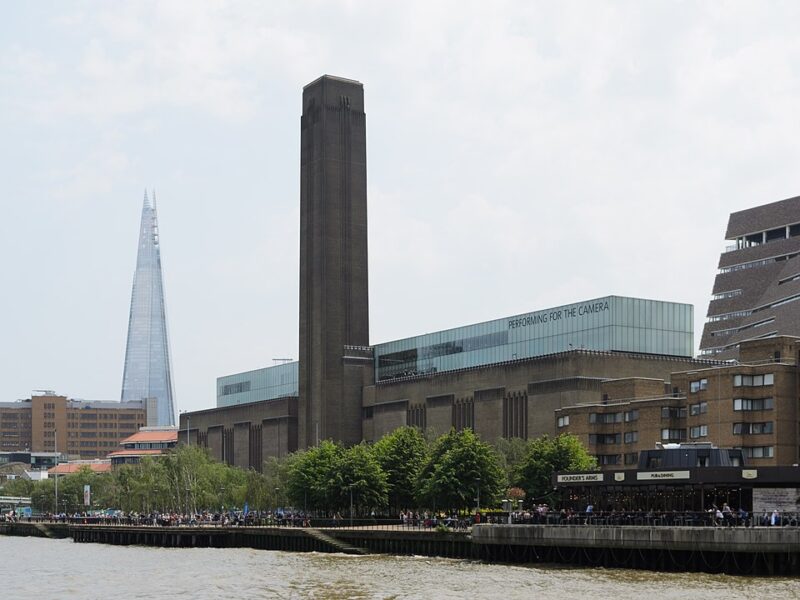
“There’s this misconception that African art is solely about masks or sculptural types,” says the volunteer African heritage tour guide at the Tate Modern art gallery in central London.
“The work we generally look at on the tour doesn’t look ‘African’.”
Inside the gallery, Nadia’s vision immediately becomes clear: the pieces she focuses on are modern, conceptual, abstract, and entirely at odds with the cliches of African art many visitors expect.
On bare white walls, bursts of colour spill out from modern canvases. Textiles hang in layered sheets, bold shapes stretch across the room and sculpture silhouettes rise in unusual forms.
Nadia runs various tours across several museums.
At the V&A, she leads the African Gaze, looking at portrayals of African people in 17th and 18th Century European art. At the British Museum, she explores the Nigerian Igbo worldview.
But here at Tate Modern, her focus is African Modernism and Afro-Surrealism – movements she says are rarely spotlighted in major Western galleries.
“Artists of African descent have often been maligned, or faced difficulty in getting visibility in the wider international industry,” she says.
Nadia tells the group on the tour that her aim is to bring attention to the artists’ work in a way that feels accessible to anyone.
Learn more. Check out Denton’s website.
Our Special Exhibits showcase the work of Black artists.
Comments Are Welcome
Note: We moderate submissions in order to create a space for meaningful dialogue, a space where museum visitors – adults and youth –– can exchange informed, thoughtful, and relevant comments that add value to our exhibits.
Racial slurs, personal attacks, obscenity, profanity, and SHOUTING do not meet the above standard. Such comments are posted in the exhibit Hateful Speech. Commercial promotions, impersonations, and incoherent comments likewise fail to meet our goals, so will not be posted. Submissions longer than 120 words will be shortened.
See our full Comments Policy here.