‘I haven’t seen any change’: black Labour voters in Liverpool and London six months on
Share
Explore Our Galleries









Breaking News!
Today's news and culture by Black and other reporters in the Black and mainstream media.
Ways to Support ABHM?
By Chris Osuh and Aamna Mohdin
In Liverpool Riverside and Tottenham, two constituencies with black MPs and large black communities, Labour’s vote share dropped by more than 20 points at last year’s election. The Guardian spoke to voters there to find out what they have made of the party’s return to power
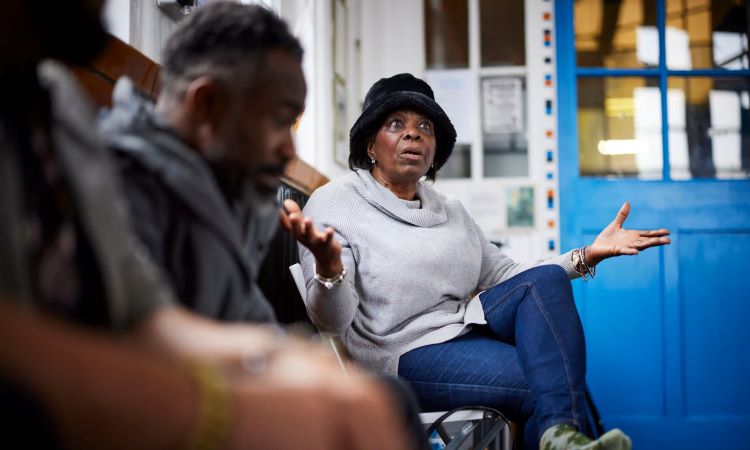
In Toxteth, a fast-gentrifying area of Liverpool that has for decades been the nucleus of the city’s 300-year-old black community, Saeed Olayiwola considered how the Labour government compared with the Conservatives. “I don’t see much that sets them apart at the moment,” Olayiwola said.
Since Keir Starmer’s government took power six months ago, voters in two urban constituencies, both represented by black Labour MPs – Liverpool Riverside and Tottenham in north London – have been weighing up the party’s decisions and talking to the Guardian.
Areas such as these, with historic and large black and minority ethnic communities, have long been loyal to the party.
The last election was no exception: Labour enjoyed a bigger lead among minority ethnic voters than it did among white voters. Support from black voters was strongest, at 68%, compared with 50% among mixed-race voters, 39% among Asian voters and 33% among white voters.
But research by the thinktank UK in a Changing Europe found that this support was an “ossified cultural and historical legacy” and that the party may not be able to rely on it in future.
There are early signs of this in Tottenham and Liverpool Riverside, where, in the July 2024 election, Labour’s vote share decreased by 20.3 points and 23.2 points respectively, denting the majorities of their MPs, David Lammy and Kim Johnson. Overall, the proportion of very safe seats across the UK fell and the number of marginal ones rose.
Six months on, black and minority ethnic voters in both constituencies are warning that they feel taken for granted by Starmer’s government.
“I can’t see a policy they have implemented so far that is any way left of centre,” said Laurence Westgaph, a historian and broadcaster from Toxteth, the historic neighbourhood at the heart of Liverpool Riverside. He defected to the Greens in July, having previously seen himself as a “loyal Labour voter”.
The Guardian explains why the party has a long way to go.
Meanwhile, Black voters in the US often feel similarly about the Democrat Party, while others see progress.
Comments Are Welcome
Note: We moderate submissions in order to create a space for meaningful dialogue, a space where museum visitors – adults and youth –– can exchange informed, thoughtful, and relevant comments that add value to our exhibits.
Racial slurs, personal attacks, obscenity, profanity, and SHOUTING do not meet the above standard. Such comments are posted in the exhibit Hateful Speech. Commercial promotions, impersonations, and incoherent comments likewise fail to meet our goals, so will not be posted. Submissions longer than 120 words will be shortened.
See our full Comments Policy here.