Humanity and history: a Q&A with “Nat Turner in Jerusalem” director Tyrone Phillips
Share
Explore Our Galleries









Breaking News!
Today's news and culture by Black and other reporters in the Black and mainstream media.
Ways to Support ABHM?
By Robert Chappell, Madison 365
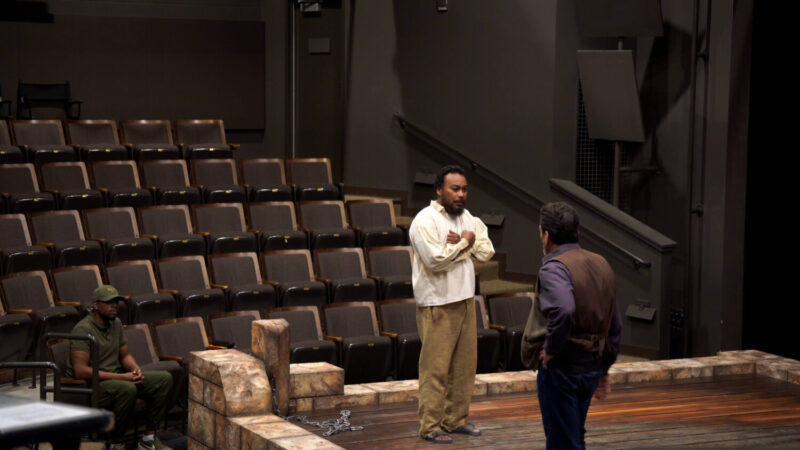
Earlier this week, [Chappell] sat down with Tyrone Phillips, director of Nat Turner in Jerusalem, to explore the profound themes and historical significance of the play currently showing at American Players Theatre (APT) in Spring Green. Phillips shared the powerful narrative behind Nathan Allen Davis’ work, which captures Nat Turner’s final hours before his execution. [They] discussed the challenges and complexities of Turner’s story, the importance of representation both on and off the stage, and the challenge of offering a fresh perspective on a figure who has been portrayed many times over the years. The conversation also highlights Phillips’ journey as an artist, his commitment to anti-racism, and the work of his multicultural theater company, Definition Theatre.
[…]
Robert Chappell: Let’s start with this show. Tell us about Nat Turner in Jerusalem and what it looks like at APT.
Tyrone Phillips: Nat Turner in Jerusalem is written by Nathan Allen Davis, and basically captures the life of Nat Turner in his final hours. It starts on his last night in a holding cell in Jerusalem, Virginia, and it follows leading up until his last morning here on Earth before he is put to death on the gallows. Not only do we meet Nat Turner, but we meet Thomas Gray, who is the lawyer who is responsible for writing his confession, which is why we even know about Nat Turner today. A lot of the source material is basically from the confessions of Nat Turner … this play is poetic, moving, has a lot to do about faith, about identity, about America’s foundation and the institution of slavery and the reckoning of that as well. This piece really just brings humanity to this man who a lot of people were torn about.
[…]
RC: Even though a lot of the basis of what we know about Nat Turner is his own confessions, but that was elicited by this white lawyer, right? Much of what’s been created about him since then is by white folks. Maybe well meaning sometimes, but not always, accurate, right?
TP: That’s right. And just to say again about this responsibility and art. This comes up a lot: whose story is this? Who should be telling this story, and not just on stage but backstage. What is the design team? What is the people who are creating the world for this play? They influence the choices of this story. Representation on and off stage is something I committed my life to with my theater company, but also with this production. How do we shed light on a story that almost was hidden, if you will. It really could have easily been lost. And so I’m thrilled to come back to APT and have their audience, who I think is ready for this story.
Find tickets to the play.
We delve into this part of history in our online exhibit about Nat Turner’s Rebellion.
Comments Are Welcome
Note: We moderate submissions in order to create a space for meaningful dialogue, a space where museum visitors – adults and youth –– can exchange informed, thoughtful, and relevant comments that add value to our exhibits.
Racial slurs, personal attacks, obscenity, profanity, and SHOUTING do not meet the above standard. Such comments are posted in the exhibit Hateful Speech. Commercial promotions, impersonations, and incoherent comments likewise fail to meet our goals, so will not be posted. Submissions longer than 120 words will be shortened.
See our full Comments Policy here.