How ‘Medical Gaslighting’ Ignores Black Women With Long COVID
Share
Explore Our Galleries









Breaking News!
Today's news and culture by Black and other reporters in the Black and mainstream media.
Ways to Support ABHM?
By Jennifer Porter Gore, Word in Black
A Facebook group of Black women dealing with long COVID describe different symptoms but the same story: clinicians telling them it’s all in their heads.
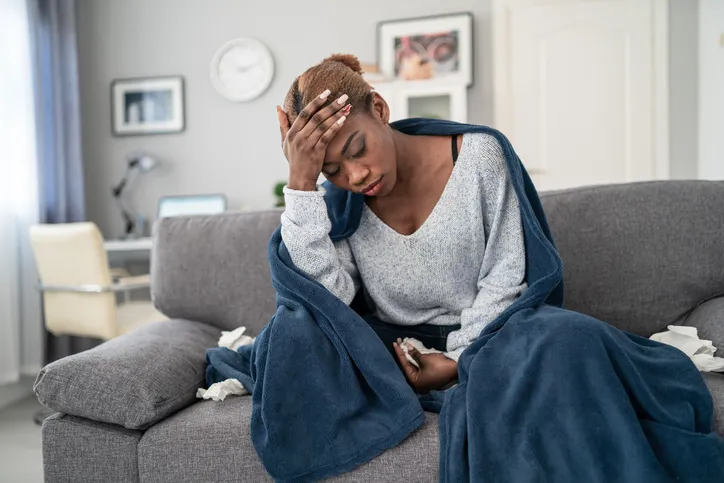
In March 2020, Margot Gage Witvliet had managed to board one of the last flights leaving Amsterdam to return to her family in Houston, Texas. It was very good luck: as the COVID-19 pandemic raced around the globe, states, localities and entire countries were closing down, and airlines were stopping their operations.
A university professor and social epidemiologist, Gage Witvliet understood exactly what it meant that a new virus was making people around the world very sick—and in many cases killing them. What she didn’t know was that, 10 days after that flight, she would get the flu-like symptoms of COVID infection.
[…]
When Gage Witvliet came down with COVID, however, she also joined the ranks of countless Black women whom medical professionals treated as if their illnesses weren’t severe or were just bad cases of anxiety. In short, they became victims of what Gage Witvliet calls “medical gaslighting.”
“I was not listened to by doctors, not taken seriously and infantilized,” she says. “Doctors tried to make me believe that my illness was all in my head.”
“This made an already stressful medical situation even more horrendous,” she said in a published medical journal article, “How COVID-19 Brought Medical Gaslighting to the Forefront and Made Invisible Illness Visible: Lessons from the BIPOC Long COVID Study.”
”I joined a COVID-19 online support group, where I witnessed woman after woman, irrespective of their socioeconomic status, race or country location, share stories about how doctors were not believing them about their COVID-19 symptoms,” she wrote. “Early in the pandemic, sharing your COVID-19 status publicly was taboo in the rural Southeast Texas town where I reside. But I decided that I would use the small platform that I had as an assistant professor to come forward about my health status and shed light on the fact that doctors were not believing women, and that women of color were having a particularly hard time being believed.”
But her saga with the healthcare system dragged on.
Continue the article here to learn more about medical gaslighting and its implications for women and BIPOC.
Learn about the white racial frame and developing counter frames.
Read about the struggle for access to adequate medical care faced by people with disabilities.
Find more breaking news.
Comments Are Welcome
Note: We moderate submissions in order to create a space for meaningful dialogue, a space where museum visitors – adults and youth –– can exchange informed, thoughtful, and relevant comments that add value to our exhibits.
Racial slurs, personal attacks, obscenity, profanity, and SHOUTING do not meet the above standard. Such comments are posted in the exhibit Hateful Speech. Commercial promotions, impersonations, and incoherent comments likewise fail to meet our goals, so will not be posted. Submissions longer than 120 words will be shortened.
See our full Comments Policy here.