How 2020 (Democratic) Contenders Are Approaching Police Brutality And Criminal Justice Reform
Share
Explore Our Galleries









Breaking News!
Today's news and culture by Black and other reporters in the Black and mainstream media.
Ways to Support ABHM?
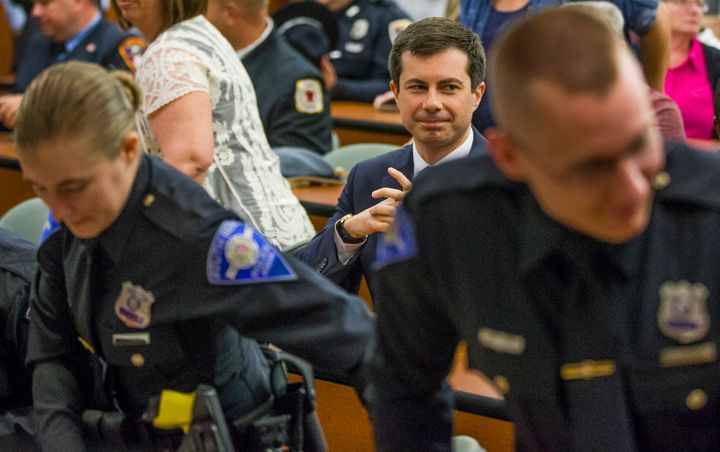 This week, in the midst of a surprisingly successful presidential campaign, South Bend Mayor Pete Buttigieg canceled several events to go back to his Indiana town and address a crisis: A white police officer with a history of making racist comments shot and killed a 54-year-old black man named Eric Logan. And Buttigieg’s black constituents are less than pleased with his response.
“How’s he handling it?” Oliver Davis, the longest-serving black member of the South Bend Common Council, told The Washington Post. “Well, he talked to the media before the family. He skipped the family vigil, full of black residents. And then he gave a speech to the police. So, how do you think that went over?”
…In an interview with BET contributor George Johnson about police brutality earlier this month… the South Bend mayor said he hopes to bring “some of the measures we have taken in South Bend” to the national level ― words that, in light of Logan’s death, may now fall flat.
“Policing really represents the beginning of somebody’s encounter with a system that has a lot of systemic racism, not just historically but if you just look at things like sentencing disparities, we know these biases are alive and well and happening right now,” he told Johnson. “If we get that right, even things that aren’t police issues like mandatory minimums or walking away from incarcerations of drug possessions it does filter back into policing.”
Buttigieg is one of several 2020 Democratic presidential candidates with strong backgrounds in managing law enforcement. New York City Mayor Bill de Blasio manages the largest police force in the country. Sen. Cory Booker (D-N.J.), who was previously mayor of Newark, also ran his city police department. Sen. Kamala Harris (D-Calif.) spent over a decade as a prosecutor, serving as district attorney of San Francisco and later as California’s attorney general. Sen. Amy Klobuchar (D-Minn.) served as county attorney for her state’s most populous county.
Read the rest of the article, with more on what other candidates are doing on this matter, here.
Read more Breaking News articles here.
Comments Are Welcome
Note: We moderate submissions in order to create a space for meaningful dialogue, a space where museum visitors – adults and youth –– can exchange informed, thoughtful, and relevant comments that add value to our exhibits.
Racial slurs, personal attacks, obscenity, profanity, and SHOUTING do not meet the above standard. Such comments are posted in the exhibit Hateful Speech. Commercial promotions, impersonations, and incoherent comments likewise fail to meet our goals, so will not be posted. Submissions longer than 120 words will be shortened.
See our full Comments Policy here.