Here’s Why We Shouldn’t Fund the Police
Share
Explore Our Galleries









Breaking News!
Today's news and culture by Black and other reporters in the Black and mainstream media.
Ways to Support ABHM?
By Brianna Patt, Dallas Weekly
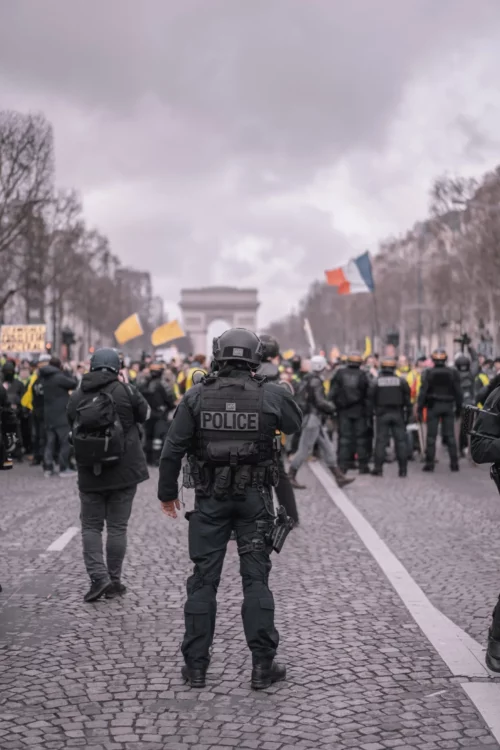
The solution to police brutality continues to be more funding under the belief that police, like many city servants, are overworked and underfunded. However, this is not the case.
[…]
According to the Center for Health Journalism, Black men and boys face the highest lifetime risk of being killed by police, with one in 1,000 likely to be killed by police in their lifetime, as well as being more likely to be stopped and frisked. This can in turn result in an increased hypervigilance in communities where there are over policing.
“This frequent surveillance and unnecessary criminalization of Black and brown communities by officers are forms of racism and they have lots of consequences for population health equity,” Hedwig Lee, co-director of the Center for the Study of Race, Ethnicity and Equity at Washington University in St. Louis said.
So, the increase in police in Dallas is not really a fix. In fact, it may increase the already present fear in the Black community regarding police.
Patt suggests fixes to this problem.
Check out this guide to defunding the police and the benefits when funds are spent elsewhere.
Our breaking news section includes more stories on this topic.
Comments Are Welcome
Note: We moderate submissions in order to create a space for meaningful dialogue, a space where museum visitors – adults and youth –– can exchange informed, thoughtful, and relevant comments that add value to our exhibits.
Racial slurs, personal attacks, obscenity, profanity, and SHOUTING do not meet the above standard. Such comments are posted in the exhibit Hateful Speech. Commercial promotions, impersonations, and incoherent comments likewise fail to meet our goals, so will not be posted. Submissions longer than 120 words will be shortened.
See our full Comments Policy here.