Having A Baby Made Me Rethink Black Excellence
Share
Explore Our Galleries









Breaking News!
Today's news and culture by Black and other reporters in the Black and mainstream media.
Ways to Support ABHM?
By Sage Howard, Huff Post
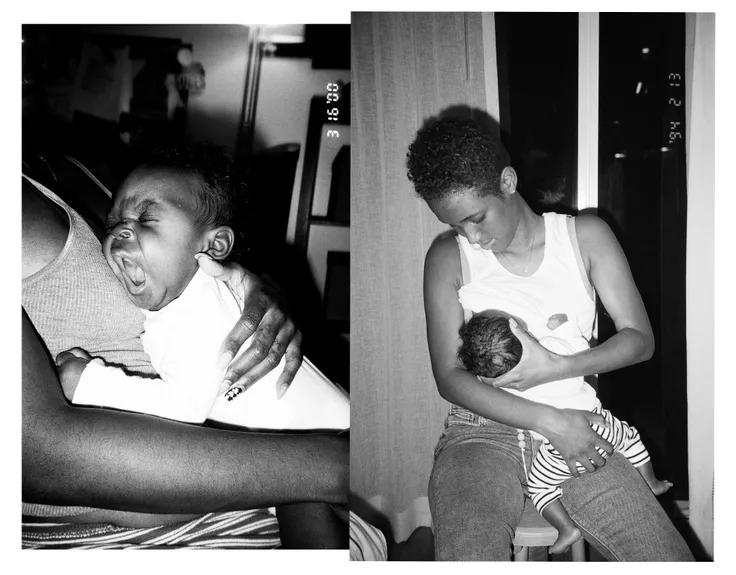
“Nothing about the situation I found myself in aligned with the vision I subscribed to for so long. Part of me felt like I was undoing everything both I and my ancestors had worked for.”
When I was 6 years old, my mother transferred me and my sisters from the predominantly Black public school in our neighborhood to one with a “more diverse” (read: super white) student body in Manhattan. While I wasn’t the only Black girl in my class, I was one of a handful — and I was new, which made me stick out even more. Most of the other Black students attended the school since kindergarten and had already adjusted to an environment structured around values set by white educators and parents.
It was there that I remember my earliest experience with racial microaggressions. For one, classmates laughed at me because I referred to the teacher as “Ms.” — a sign of respect at my previous school — instead of calling her by her first name, which was the norm at this one. Being thrust into this setting made me hyper-aware that I was an outsider, creating an unsettling sensation in my chest that I now know to be anxiety.
There’s a feeling that many people of color learn to live with when they find that they occupy a space that was not intended for them. It’s an aching desire to crawl into oneself and hide. As a little girl, I didn’t have the words for it. My parents knew the feeling but didn’t appear to have the words either. They insisted that my sisters and I would be OK because the school mirrored a society we’d soon be thrown into and expected to succeed in as adults.
I grew up in a household where our American Dream was “Black excellence.” On the surface, Black excellence is simply the celebration of the success of a Black person. At its root, however, it measures a person’s ability to attain mainstream white standards of success despite facing constant adversity. As I understand it now, Black excellence means adhering to respectability politics, a deceptive vehicle that measures my worth by standards set by white men.
Discover more about the respectability politics that Black Americans must deal with.
Black mothers must also contend with biological weathering. Even when Black women achieve excellence, they are overlooked.
Never miss out on the latest Black news.
Comments Are Welcome
Note: We moderate submissions in order to create a space for meaningful dialogue, a space where museum visitors – adults and youth –– can exchange informed, thoughtful, and relevant comments that add value to our exhibits.
Racial slurs, personal attacks, obscenity, profanity, and SHOUTING do not meet the above standard. Such comments are posted in the exhibit Hateful Speech. Commercial promotions, impersonations, and incoherent comments likewise fail to meet our goals, so will not be posted. Submissions longer than 120 words will be shortened.
See our full Comments Policy here.