Happy Birthday, Faith Ringgold, Boundary-Breaker, Black Artist and Arts Promoter!
Share
Explore Our Galleries









Breaking News!
Today's news and culture by Black and other reporters in the Black and mainstream media.
Ways to Support ABHM?
From the African American Registry
On this date in 1930, Faith Ringgold was born in New York City. She is an African-American artist who has spent her artistic career breaking out of boundaries and clearing spaces for African-American creativity, especially that of women.
Raised in Harlem, Ringgold earned a BA in art and education in 1955 and an MFA in 1959 at City College, New York. Dissatisfied with the traditional high art training that she received, Ringgold reeducated herself by studying African art, reading the work of Black Arts Movement authors, and participating in the growing protest for a civil rights revolution in America. Paintings from this period blend an African-inspired aesthetic of geometric shapes and flat, shadowless perspective with potent political and social protest.
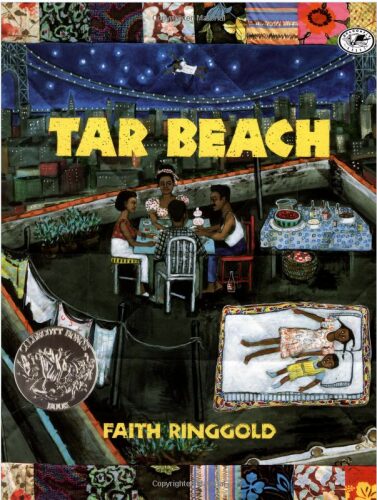
Ringgold has been an outspoken critic of racial and gender prejudice in the art world. In the early 1970s, Ringgold organized protests against The Whitney Museum of American Art and other major museums for excluding the works of blacks and women. Ringgold’s expression of black women’s experience is captured in a combination of quilting and narrative text. She transformed one of her quilts into a children’s book, “Tar Beach,” that won the 1992 Caldecott Honor Book Award and the Coretta Scott King award.
Learn more about Faith Ringgold here and the book Tar Beach here.
See another artist’s reaction to racism.
More breaking news here.
Comments Are Welcome
Note: We moderate submissions in order to create a space for meaningful dialogue, a space where museum visitors – adults and youth –– can exchange informed, thoughtful, and relevant comments that add value to our exhibits.
Racial slurs, personal attacks, obscenity, profanity, and SHOUTING do not meet the above standard. Such comments are posted in the exhibit Hateful Speech. Commercial promotions, impersonations, and incoherent comments likewise fail to meet our goals, so will not be posted. Submissions longer than 120 words will be shortened.
See our full Comments Policy here.