George Washington’s Runaway Slave, Harry
Share
Explore Our Galleries









Breaking News!
Today's news and culture by Black and other reporters in the Black and mainstream media.
Ways to Support ABHM?
By Henry Louis Gates, Jr., the Root, Amazing Fact About the Negro No. 9
His journey would take him a world away from Mount Vernon
Of our first five presidents, four owned slaves. Thomas Jefferson’s slave-owning legacy has been covered in the news lately; however, the biggest slave owner among the four men was the father of our country, George Washington.
Washington and his wife Martha together owned about 200 slaves at the beginning of the Revolution, but at the end of his life the couple owned 317 slaves together. And at least two of these became quite famous, for very different reasons.
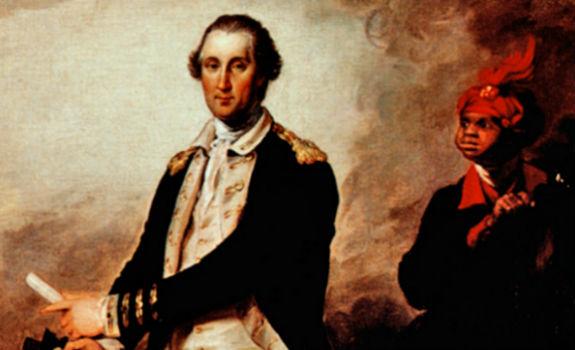
William “Billy” Lee, Washington’s personal servant, was the only slave whom Washington freed outright upon the former president’s death (all the others were to be freed upon his wife’s death, though she freed them 12 months after Washington passed). He is depicted looking adoringly at his master in John Trumbull’s famous painting of the president of 1780, standing faithfully by his side.
At the other extreme of attitudes toward the master of Mount Vernon, however, stands another slave. He was a fascinating rebel named Harry, whose life and times have been painstakingly recreated by the historian Cassandra Pybus. And Harry’s dogged determination to be free suggests that not all of the slaves found Washington to be the benevolent master whom historians have depicted.
Read Harry’s amazing story here.
Check out our online gallery about slavery.
Comments Are Welcome
Note: We moderate submissions in order to create a space for meaningful dialogue, a space where museum visitors – adults and youth –– can exchange informed, thoughtful, and relevant comments that add value to our exhibits.
Racial slurs, personal attacks, obscenity, profanity, and SHOUTING do not meet the above standard. Such comments are posted in the exhibit Hateful Speech. Commercial promotions, impersonations, and incoherent comments likewise fail to meet our goals, so will not be posted. Submissions longer than 120 words will be shortened.
See our full Comments Policy here.