‘Genocide Project’–Study Shows Shocking Stats of Blacks Murdered In Brazil
Share
Explore Our Galleries









Breaking News!
Today's news and culture by Black and other reporters in the Black and mainstream media.
Ways to Support ABHM?
By Tanasia Kenney, Atlantablackstar.com
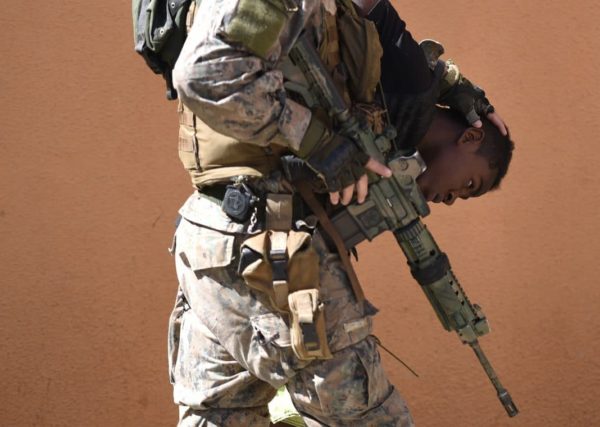
An overwhelming majority of murder victims in Brazil are of African descent, statistics showed. (Photo by Fabio Teixeira /Anadolu Agency/Getty Images)
The killings of African descendants in Brazil has gotten so bad that a researcher has dubbed the South American nation a “genocide project” of Black people.
A recent study by the Institute for Applied Economic Research and the Brazilian Forum of Public Safety, released Monday, June 5, found that Afro-Brazilians are 23.5 percent more likely to be killed than any other ethnic group in the country. Researchers’ appropriately titled “2017 Violence Atlas” also revealed that for every 100 murders in Brazil, 71 are of Black Brazilians.
“It’s not by chance that most people who die are Black, [and] that the majority of those incarcerated are Black people,” said lawyer, researcher and actress Dina Alves, who studies race, gender and class in Brazil. “It’s the state that kills when police kill.”
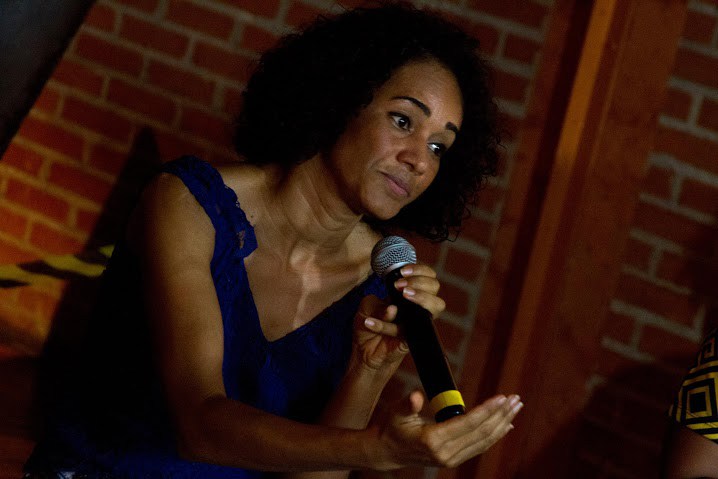
“We die because of our color,” says lawyer, researcher and actress Dina Alves. In an interview, she explains how just being black in Brazil is seen as a crime in the criminal law system.
Alves, an outspoken supporter of the rights of Afro-Brazilians, said the staggering numbers are proof that Brazil is virtually exterminating its Black population. In a sit-down interview with Black Women of Brazil last year, she discussed how simply being Black is often viewed as a crime in Brazil’s criminal law system.
“For us, Black women and men and indigenous, we are still in the fight for reaffirmation of our humanity and political existence,” Alves said….
Data complied by the atlas was based on information obtained by the Mortality Information System of the Brazilian Ministry of Health, TeleSUR reported. The statistics indicated that in 2007, Brazil’s homicide rate was 48,000 people per year. By 2015, the number of Brazilians murdered each year had jumped to 59,080. A large majority of the victims were young, uneducated Afro-Brazilians who lived on the outskirts of large cities….
In just the first five months of 2017, “the total number of murders in the country surpassed the number of people killed in all of the terrorist attacks in the world,” researchers wrote.
Read the full article here.
Read the full interview with Dina Alves here.