Frustrations, fear of erasing history voiced after artifacts returned from African American history museum
Share
Explore Our Galleries









Breaking News!
Today's news and culture by Black and other reporters in the Black and mainstream media.
Ways to Support ABHM?
By Catalina Pérez De Armiñán, NBC Washington
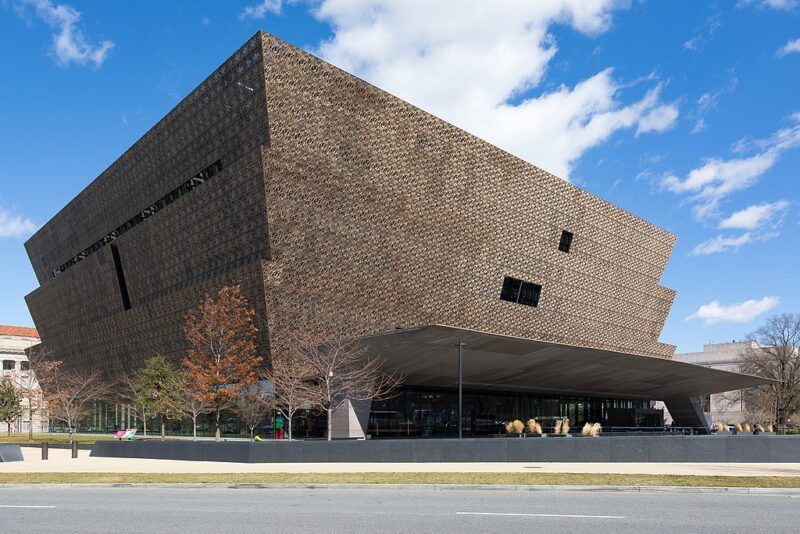

Frank Schulenburg, CC BY-SA 4.0, via Wikimedia Commons)
Several artifacts are being removed from the National Museum of African American History and Culture, according to the owners of the artifacts.
The removals come after the Trump administration issued an executive order to remove pieces of history from Smithsonian museums in D.C.
The owners of some historical objects inside the museum tell News4 their items are being wiped from the displays.
Some visitors were shocked to see some gone, saying they strategically planned their visits to be able to see the most artifacts in case some were removed.
Civil rights activist Rev. Amos Brown says he was recently notified two of the artifacts he loaned to the museum would be returned back to him.
He described one of the books written by Rev. George Washington Williams in 1880 as a “precious and most historic book” and the “first history of the Negro race.”
The other book was a Bible he took to demonstrations with Dr. Martin Luther King Jr. and Jesse Jackson.
Brown said he lent the artifacts to the Smithsonian in 2016. He said the museum always gave him the option of donating the books permanently or renewing the loan, but this time he wasn’t asked.
“It is downright dishonest and it is demeaning,” Brown said. “I hope people of good will, of conscience and common sense will rise up and say ‘we need to stop this’.”
Jeff Anderson, a tourist from Louisiana, hoped to see the museum before any changes were made.
“It’s a shame that fear of black people finding out their history has caused that kind of thing, you know,” Anderson said.
We’ll never remove Black history from our museum or online galleries.
Comments Are Welcome
Note: We moderate submissions in order to create a space for meaningful dialogue, a space where museum visitors – adults and youth –– can exchange informed, thoughtful, and relevant comments that add value to our exhibits.
Racial slurs, personal attacks, obscenity, profanity, and SHOUTING do not meet the above standard. Such comments are posted in the exhibit Hateful Speech. Commercial promotions, impersonations, and incoherent comments likewise fail to meet our goals, so will not be posted. Submissions longer than 120 words will be shortened.
See our full Comments Policy here.